
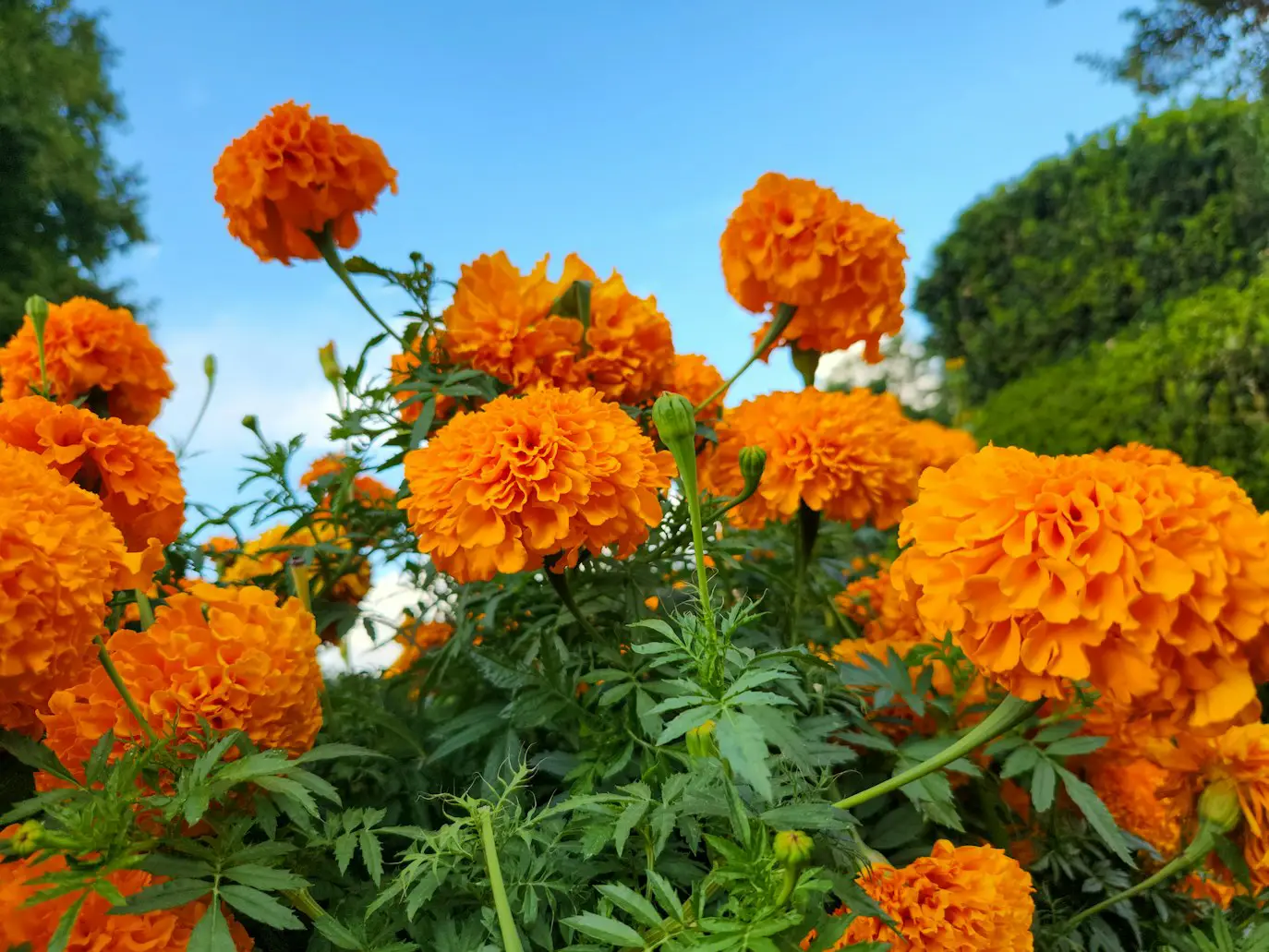

If you’re wondering what eats marigolds in my garden, you’re not alone. These vibrant flowers are known for their pest-repelling properties, yet many gardeners find their marigolds mysteriously damaged. Despite their reputation, marigolds can attract a variety of pests and animals who see them as a tasty snack. From insects like slugs and aphids to larger visitors like rabbits and deer, several culprits might be behind the damage. If marigolds in my garden are losing petals or showing chewed leaves, it’s time to investigate. Identifying the cause is the first step toward protecting your plants from further harm.
Your marigolds are disappearing overnight. Here’s what might be eating them.
Waking up to find your marigolds in my garden stripped of blooms or leaves can be frustrating. Overnight damage is often the work of nocturnal pests like slugs, snails, or even rabbits. These creatures prefer to feed under the cover of darkness, leaving behind ragged holes or completely bare stems. Slug trails or droppings can confirm the presence of these sneaky invaders. If something consistently eats marigolds in my garden overnight, installing motion-activated lights or setting out natural deterrents can help reduce unwanted feeding and protect your flowers.
Love marigolds but keep finding chewed petals? Let’s find the culprit.
Chewed petals are a sure sign that your marigolds in my garden have become a meal. Japanese beetles and caterpillars are common offenders during the warmer months. They typically feed during daylight hours, making them easier to spot and control. If you notice metallic-looking beetles or caterpillars crawling on the flower heads, these are likely the pests to target. To stop whatever eats marigolds in my garden, try hand-picking, using neem oil, or applying insecticidal soap to prevent further petal damage.
Something’s munching on your marigolds, and it might not be what you expect.
Not all marigold munchers are obvious. Birds, squirrels, and even domestic pets like cats can damage marigolds unintentionally while playing or searching for insects. If you notice trampled plants or broken stems along with missing flowers, you may be dealing with more than just insects. Sometimes the animals that eat marigolds in my garden aren’t interested in the plant at all; they’re looking for food underneath it. Installing barriers or using scent-based deterrents can help deter these unexpected guests.
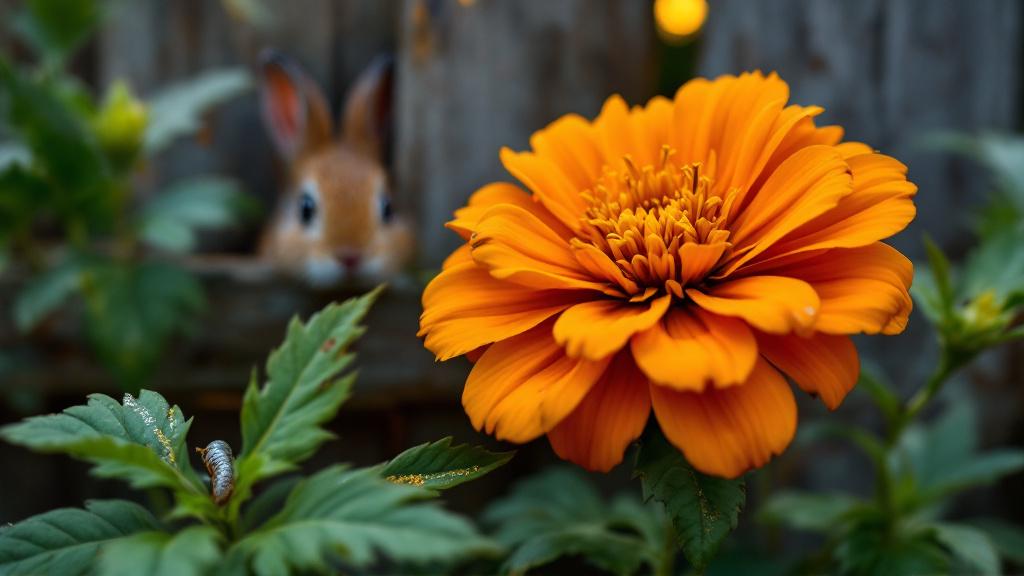
Noticed holes in your marigold leaves? These common garden pests could be to blame.
Small to medium-sized holes in marigold leaves are typically the result of insect feeding. Slugs, snails, and leafhoppers are often behind the damage. Slugs and snails leave irregular holes and shiny trails, while leafhoppers create tiny pinpricks across the leaf surface. These pests eat marigolds in my garden primarily during wet or humid conditions, so keeping the soil dry and using diatomaceous earth can help keep their populations down. Regular monitoring is key to stopping these pests before they cause widespread damage.
Who’s feasting on your flowers? Uncover the mystery of damaged marigolds.
A marigold’s bright colors can attract attention, not just from humans but from wildlife too. Rabbits, deer, and groundhogs all enjoy the soft blooms and leaves. If the entire plant disappears overnight or you notice cleanly cut stems, it’s likely the work of larger animals. To stop these creatures that eat marigolds in my garden, consider installing fencing, using motion-activated sprinklers, or spreading scent deterrents like garlic or predator urine around your garden’s edge.
Think marigolds are pest-proof? Here’s what’s actually eating them.
Marigolds are praised for their ability to repel pests, but that doesn’t mean they’re immune to being eaten. Aphids, spider mites, and whiteflies may not chew, but they suck sap from the leaves and stems, causing yellowing and stunted growth. Despite their reputation, marigolds in my garden can still fall victim to these sap-feeding pests. Inspect the underside of leaves closely, and consider using a strong water spray or insecticidal soap to keep infestations under control.
Marigolds are supposed to repel pests, so why are yours being eaten?
Marigolds do repel certain pests like nematodes and some beetles, but they can attract others. For example, slugs and Japanese beetles actually prefer marigolds, making them a common target. If something eats marigolds in my garden, it doesn’t mean the plant has failed; it may just be attracting the wrong kind of attention. Companion planting, physical barriers, and consistent monitoring can help strike a balance between pest control and plant protection.
From bugs to bunnies, discover what’s destroying your marigolds.
When it comes to pest damage, it’s rarely one culprit alone. A combination of insects, rodents, and even the environment can stress your plants and make them more susceptible. If marigolds in my garden are consistently under attack, take a layered approach to prevention: control moisture, use netting or fencing, and apply safe pest deterrents as needed. Keeping a garden journal can also help track when and where the damage occurs, making it easier to identify what’s going wrong.
Your marigolds are a buffet; here’s how to stop the uninvited diners.
Once pests know where to find a meal, they often return. Whether it’s bugs or critters that eat marigolds in my garden, prevention is the best long-term strategy. Use floating row covers to protect seedlings, apply natural repellents like garlic spray, or sprinkle crushed eggshells to deter slugs. Physical barriers and companion plants (like rosemary or sage) can also discourage many of the usual suspects. With the right approach, your marigolds can thrive without becoming an all-you-can-eat buffet.
Before you blame insects, find out the real threat to your garden marigolds.
It’s easy to assume insects are the problem, but they aren’t always the ones to blame. Poor soil, overwatering, or too much shade can weaken marigolds, making them vulnerable to pests and disease. Sometimes what appears to be pest damage is actually environmental stress. Sometimes what appears to be pest damage is actually environmental stress caused by planting outside your local climate.
For instance, if you live in Southern California, understanding what garden zone is San Diego will help you determine if your marigolds are struggling due to temperature extremes or actual pests. Before jumping to conclusions about what eats marigolds in my garden, evaluate growing conditions. Healthy, well-maintained plants are better equipped to withstand the occasional nibble, and identifying the true cause can save you time and effort.


