
Creating a garden full of cutting garden flowers is one of the most rewarding ways to enjoy beauty indoors and outdoors. A cutting garden allows you to grow an abundance of blooms perfect for floral arrangements, bouquets, or simple home décor. With the right planning, you can have continuous color and fragrance from early spring to late fall. Growing garden flowers specifically for cutting ensures your plants are both ornamental and functional. This guide will help you choose the right varieties, care for them properly, and harvest them at the perfect time for long-lasting, stunning blooms.
Why Every Gardener Should Grow Their Own Cutting Garden Flowers
Growing your own cutting garden flowers brings joy, sustainability, and creativity together. Instead of buying bouquets, you can step into your cutting garden and pick fresh blooms whenever you want. It’s an eco-friendly and cost-effective way to enjoy floral beauty year-round. Cultivating your own garden flowers also allows for more variety, fragrance, and personalization than store-bought options. From elegant roses to cheerful zinnias, each stem reflects your care and style. Beyond aesthetics, maintaining a cutting garden connects you to nature and provides a sense of peace and accomplishment with every bloom you harvest.
The Best Flower Varieties for a Long-Lasting Cutting Garden
Choosing the right cutting garden flowers is key to a vibrant and long-lasting display. Ideal varieties include zinnias, dahlias, sunflowers, cosmos, and snapdragons, each offering unique shapes and colors. For a touch of fragrance, add sweet peas, lavender, or garden roses. Including both annuals and perennials ensures continuous blooming throughout the season. When planning your cutting garden, mix heights and textures for more dynamic bouquets. These garden flowers not only provide beauty but also attract pollinators like bees and butterflies. A diverse selection guarantees your cutting garden remains colorful and productive from spring through the first frost.
How to Design a Cutting Garden That Blooms from Spring to Fall
Designing a cutting garden that blooms all season requires thoughtful planning. Begin by selecting cutting garden flowers with staggered bloom times: early bloomers like tulips, midsummer favorites like zinnias, and late-season beauties like dahlias. Group plants with similar sunlight and watering needs for easier maintenance. Include a mix of tall, medium, and filler garden flowers to create balance and depth. Leave space between rows for easy harvesting and airflow to prevent disease. By designing with variety and timing in mind, your cutting garden will reward you with continuous, colorful blooms that fill vases all year long.
Designing a garden that blooms all season requires starting at the right time. For the perfect kickoff, check out our guide on beautiful flowers to plant in spring to ensure a colorful season ahead from the very beginning.
Sunlight, Soil, and Spacing: The Foundation for Healthy Cutting Flowers
The secret to thriving cutting garden flowers lies in their growing conditions. Most garden flowers love full sun, requiring at least six hours of direct light each day. Use well-draining soil rich in organic matter to support strong root growth. Compost and mulch help retain moisture while preventing weeds. Proper spacing is equally important; crowded plants compete for nutrients and increase disease risk. Follow recommended plant distances to allow air circulation and easy harvesting. With ideal sunlight, fertile soil, and thoughtful spacing, your cutting garden will flourish, producing stronger stems, larger blooms, and a healthier overall garden.
Seed or Bulb? Choosing the Right Way to Grow Your Cutting Garden
When starting a cutting garden, choosing between seeds and bulbs depends on your goals. Cutting garden flowers like zinnias, cosmos, and marigolds grow easily from seed and offer quick results. Bulb-grown garden flowers such as tulips, lilies, and dahlias provide structure, fragrance, and longevity. Many gardeners use both for continuous bloom cycles. Seeds are budget-friendly and ideal for mass planting, while bulbs deliver dependable blooms year after year. Combining the two methods ensures a dynamic and resilient cutting garden, giving you the perfect balance between seasonal color and perennial beauty for cutting arrangements.
Common Mistakes to Avoid When Growing Cutting Garden Flowers
Even the best gardeners make mistakes when growing and cutting garden flowers. Overcrowding is one of the biggest issues, as it reduces airflow and invites pests. Using poor-quality soil or skipping fertilization can also lead to weak stems and fewer blooms. Neglecting to deadhead spent garden flowers shortens the blooming season. Another common mistake is harvesting flowers at the wrong time of day; always cut early in the morning when blooms are hydrated. By avoiding these pitfalls and giving your cutting garden consistent care, you’ll enjoy healthier plants and a steady supply of vibrant, long-lasting flowers.
How to Harvest Flowers Without Damaging Your Plants
Proper harvesting techniques keep your cutting garden flowers blooming longer. Use clean, sharp scissors or pruners to avoid bruising stems. Cut garden flowers early in the morning when they’re fully hydrated and choose buds that are just beginning to open. Remove any leaves below the water line to prevent bacterial growth.
Cutting stems at an angle helps them absorb water more efficiently. Always harvest regularly, as this encourages more blooms and extends the life of your cutting garden. Ultimately, the goal is not just to pick flowers but to grow a garden that thrives and replenishes itself, rewarding your gentle handling and right timing with a season full of vibrant beauty.
Tips for Keeping Your Cut Flowers Fresh Longer Indoors
Once harvested, your cutting garden flowers deserve care to stay fresh indoors. Immediately place them in clean water with a floral preservative or homemade solution (sugar, lemon juice, and bleach). Trim the stems every few days and change the water regularly. Keep garden flowers away from direct sunlight and fruit, which emits ethylene gas that speeds up wilting. Remove any fading petals to maintain a neat appearance. Following these simple steps helps your blooms last up to twice as long. With proper aftercare, your cutting garden will fill your home with long-lasting natural beauty.
Creative Ways to Arrange and Display Cutting Garden Flowers
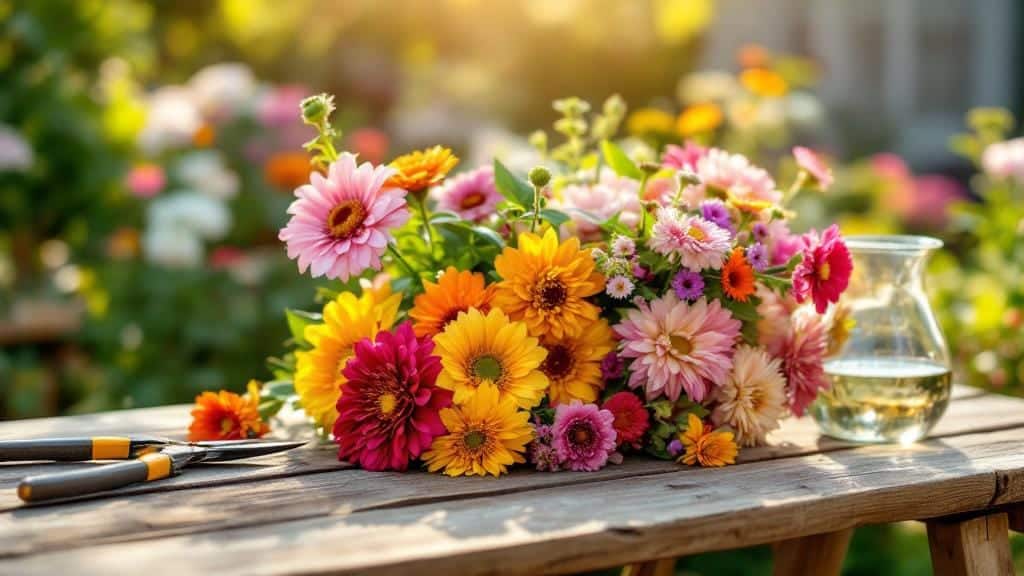
Arranging cut garden flowers is an art that brings your garden’s colors to life indoors. Mix different heights, textures, and colors for balance and harmony. Pair large focal blooms, such as dahlias or roses, with smaller filler garden flowers, such as baby’s breath or statice. Use mason jars, vintage pitchers, or ceramic vases for creative displays. Grouping flowers by color can create elegant monochrome arrangements, while mixed bouquets add a lively, rustic charm. With endless combinations available, your cutting garden can inspire unique floral designs that brighten every room and beautifully express your personal style.
Perennial vs. Annual Blooms: Which Are Better for a Cutting Garden?
Both perennials and annuals have their place in a cutting garden. Annual garden flowers, such as zinnias and cosmos, bloom profusely throughout one season and are perfect for constant cutting. Perennials like peonies, daisies, and coneflowers return each year, offering dependable structure and beauty. Combining both creates balance. Annuals deliver vibrant color and quick growth, while perennials provide long-term value and stability. The best cutting garden flowers mix the two types, ensuring continuous harvests and varied textures. This blend allows gardeners to enjoy reliable blooms year after year with plenty of fresh flowers for cutting.


