

Hydroponics has become one of the most popular ways to grow food without soil. With its ability to produce faster growth rates, higher yields, and clean, controlled environments, more growers are turning to hydroponic methods for vegetables of all kinds. But this leads to a common question among gardeners: Can you grow potatoes hydroponically?
The short answer is yes, you absolutely can grow potatoes hydroponically, and with great success. Hydroponic potatoes often grow faster, produce cleaner tubers, and allow growers to harvest fresh potatoes year-round. However, because potatoes are root vegetables with large, developing tubers, growing them hydroponically requires more attention to system design, lighting, and growing medium than leafy greens like lettuce.
In this comprehensive guide, we’ll explore how hydroponic potato growing works, the best systems to use, what challenges to expect, and how to achieve maximum yields.
Can You Grow Potatoes Hydroponically? Yes, Here’s How It Works
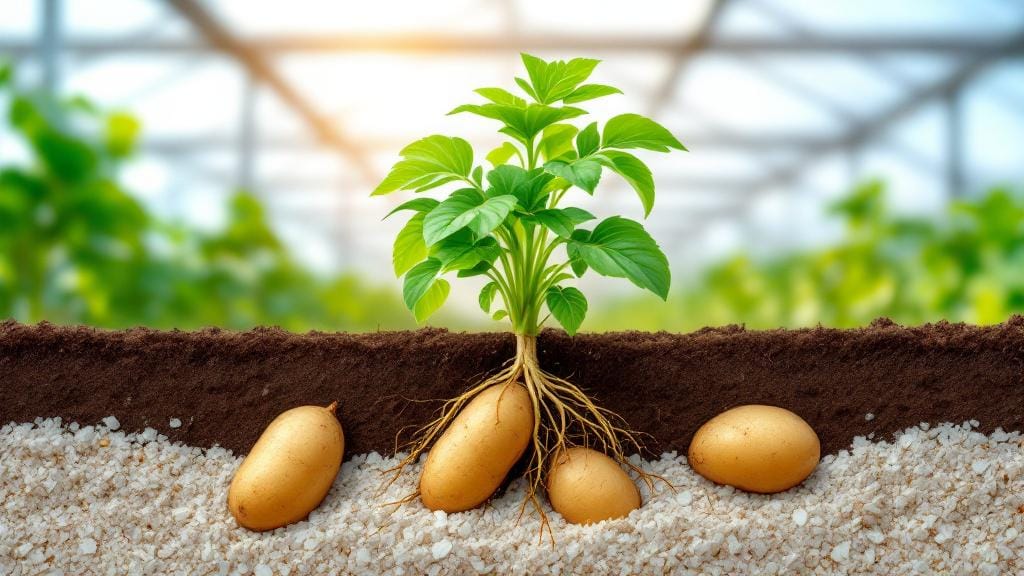
Hydroponics allows plants to grow without soil by using nutrient-rich water to feed their roots directly. Potatoes, despite being root crops, do not require soil specifically; they require consistent moisture, oxygen, and space for tubers to expand.
When grown hydroponically, potatoes receive:
- Constant access to balanced nutrients
- Clean, controlled moisture levels
- Aerated root zones to prevent rot
- Protection from soil pests and diseases
Because tuber formation depends on root zone health and environmental stability, hydroponics can offer ideal conditions, sometimes even better than traditional soil beds.
Benefits of Growing Potatoes Hydroponically
While growing potatoes in soil is traditional, hydroponic methods come with unique advantages. When considering the best plants to grow in your garden, potatoes often top the list because of their high yield and nutritional value. However, moving them into a hydroponic setup can take those results to a whole new level.
1. Faster Growth and Higher Yields
Hydroponic potatoes often grow 20–30% faster than soil-grown ones. This is because:
- Plants expend less energy searching for nutrients
- Water and airflow are controlled
- Nutrients are delivered directly
This results in faster tuber initiation and stronger plant development.
2. Cleaner, Pest-Free Potatoes
One of the biggest advantages: no dirt, no pests.
Potatoes grown in soil attract:
- Wireworms
- Potato beetles
- Soil fungi
- Nematodes
Hydroponic environments eliminate these risks, giving you cleaner tubers.
3. Less Water, More Sustainability
Hydroponic systems recirculate water, reducing water waste by up to 90% compared to traditional farming. Potatoes, which usually require large amounts of water, can be grown efficiently in hydroponics without stressing local water supplies.
4. Year-Round Indoor Growing
Hydroponics allows potatoes to be grown indoors with grow lights, no matter the season. This is especially valuable in regions with cold winters or limited farmland.
5. Space-Efficient, Vertical-Friendly Growing
Systems like NFT towers or stacked buckets allow multiple potato plants to grow vertically, saving floor space and increasing plant density.
Challenges of Growing Potatoes Hydroponically
While it’s entirely possible, hydroponic potato growing does present unique challenges.
1. Space Required for Tubers
Potatoes need room to expand. Tubers require a deep growing medium or specialized containers to form properly.
2. Risk of Root Rot if Not Aerated Properly
Potatoes dislike soggy roots. Hydroponic setups must ensure:
- Proper oxygenation
- Adequate drainage
- Good airflow
Systems like Deep Water Culture (DWC) are not ideal unless heavily aerated.
3. Light Requirements
Potato plants need:
- 10–14 hours of light daily
- Strong full-spectrum lighting indoors
- Cooler temperatures during tuber initiation
Incorrect lighting can lead to weak stems and poor tuber development.
4. Nutrient Balance Must Be Precise
Potatoes require:
- Higher potassium
- Moderate nitrogen
- Steady calcium
Too much nitrogen can lead to leafy growth at the expense of tubers.
Best Hydroponic Systems for Growing Potatoes
Not all hydroponic setups work equally well for potatoes. Here are the best options:
1. Deep Water Culture (DWC) – With Modifications
DWC works if you add the following:
- Extra aeration
- A deep, wide container
- Hydroton clay pebbles for support
This system keeps roots submerged in nutrient solution while providing oxygen via air stones.
2. Dutch Bucket System (Bato Buckets)
This is often the best system for potatoes because it allows the following:
- Excellent drainage
- Individual containers per plant
- Deep growing areas for tubers
Fill buckets with:
- Perlite
- Coarse coco coir
- Clay pebbles
And connect them to a recirculating system.
3. Kratky Method (Passive Hydroponics)
Surprisingly, you can grow potatoes using a modified Kratky system with:
- Large bins or buckets
- Net pots
- A large volume of nutrient water
The water level drops as plants grow, creating air space for roots. This method is simple, low-cost, and effective.
4. Drip Hydroponic System
A drip system provides the following:
- Slow, steady nutrient delivery
- Excellent oxygenation
- Control over moisture levels
This is ideal for growers who want control and efficiency.
How to Grow Potatoes Hydroponically: Step-by-Step
Here is a detailed process to ensure success.
Step 1: Choose Seed Potatoes
Before you plant your potato chunks, it’s essential to understand the basics of germination. You can check our guide on how to start seeds for hydroponics to get the best results from the very beginning.
Select certified, disease-free seed potatoes.
Cut large potatoes into chunks containing at least two “eyes” each.
Let the cut pieces cure for 24–48 hours to form a protective skin before planting.
Step 2: Prepare Your Growing Container
Use deep buckets or containers depending on your system.
Fill them with:
- 60% perlite
- 40% coco coir or clay pebbles
This creates excellent drainage and aeration.
Step 3: Plant the Seed Potatoes
Place potato chunks 2–3 inches deep into the growing medium.
Cover loosely, don’t pack the medium tightly.
Step 4: Add Hydroponic Nutrient Solution
Use a potato-friendly nutrient ratio:
- Low nitrogen (N)
- High potassium (K)
- Moderate phosphorus (P)
Early stages: 1–1–1 ratio
Tuber formation: 1–2–4 or similar
Keep pH between 5.8 and 6.2.
Step 5: Provide Strong Lighting
If growing indoors, use:
- LED full-spectrum grow lights
- 10–14 hours of daily light
- Lights placed 12–18 inches above plants
Potato plants grow tall, so adjust the lights regularly.
Step 6: Mound the Growing Medium as Plants Grow
Just like soil-grown potatoes, hydroponic potatoes require “mounding.”
As stems grow:
- Add more growing medium
- Cover the bottom portion of the stem
- Allow new tubers to form along the buried stem
This dramatically increases yield.
Step 7: Monitor Nutrients and Water Levels
Check:
- pH daily
- EC/PPM every few days
- Signs of nutrient deficiency
Potatoes are heavy feeders during tuber growth.
Step 8: Harvest in 70–120 Days
Hydroponic potatoes are typically ready faster than soil-grown potatoes.
Signs they’re ready:
- Plants turn yellow
- Leaves die back
- The medium becomes loose around the tubers
Simply remove the container and pull out your clean, soil-free potatoes.
Best Potato Varieties for Hydroponics
Some varieties perform better in hydroponic systems due to their size and growth habits.
Top hydroponic potato varieties:
- Yukon Gold
- Red Pontiac
- White Superior
- Fingerling potatoes
- Russet Norkotah
- Kennebec
Fingerlings are especially popular because they require less tuber space.
Common Mistakes When Growing Hydroponic Potatoes
Avoid these pitfalls for maximum success:
1. Using the wrong growing medium
Dense or waterlogged media cause root rot.
2. Too much nitrogen
Leads to leaves, not tubers.
3. Poor airflow
Encourages mold and limits oxygen to roots.
4. Inadequate depth
Tubers need room to form properly.
5. Not “mounding.”
Failing to add medium reduces yields significantly.
Yes, You Can Grow Potatoes Hydroponically and Very Successfully
So, can you grow potatoes hydroponically? Absolutely.
Hydroponics allows for:
- Faster growth
- Cleaner tubers
- Minimal pests
- Year-round production
- High yields in small spaces
With the right system, proper lighting, and nutrient management, anyone can produce delicious hydroponic potatoes at home or commercially.


