
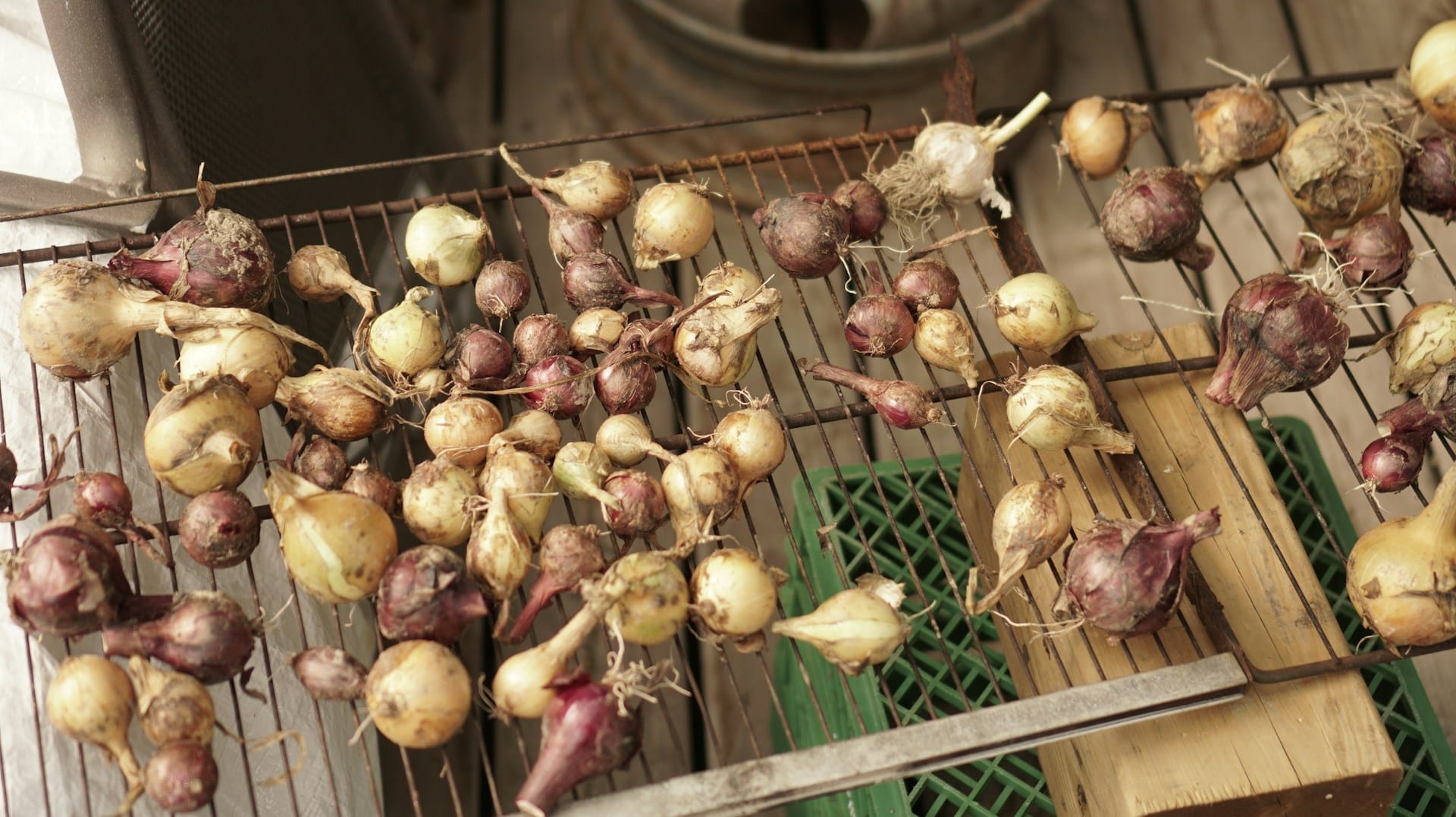

Onions last longest when they’re cured after harvest and stored somewhere cool, dry, dark, and breathable. Skip curing, and even a flawless harvest can turn to mush in weeks.
Pulling onions out of the ground is the easy part. What you do in the days after that decides whether you’re still cooking with them at Christmas or scraping half the batch into the trash by October. Here’s how to preserve onions from the garden so they actually make it that far.
Curing Comes Before Storing, Not After
A freshly pulled onion is loaded with moisture in its outer layers and neck. That moisture has to go somewhere before storage, or it turns into rot within days. Curing hardens the outer skins into a papery shell that seals the bulb off from bruising, moisture, and decay.
Skip this step, and you’ll know exactly why homegrown onions rot faster than the ones from the grocery store. Those were cured commercially long before they hit a shelf.
When to Pull Onions for the Best Storage Life
Onions are ready once the tops yellow and flop over on their own, usually mid to late summer, depending on variety and planting date. Pull them too early, while the tops are still green and standing, and you’ll end up with thinner skins and a shorter shelf life. Wait until most of the tops have gone down, and the bulbs will have had time to fully mature.
Try to dig on a dry day. Wet soil clinging to the bulbs slows curing and raises the odds of rot setting in.
How to Actually Cure Onions
Curing takes two to four weeks, give or take, depending on humidity and airflow where you’re drying them.
- Spread onions in a single layer somewhere warm, dry, and shaded, a garage, shed, or covered porch works fine.
- Leave the tops and roots attached while curing. Cutting them early opens a door for moisture and bacteria to get in.
- Turn the onions now and then so air reaches every side evenly.
- You’ll know curing is done when the outer skins feel papery, and the necks are tight and dry, not soft or damp.
- Toss any onion with a soft spot or bruise instead of storing it. One bad onion can take down the ones sitting next to it.
Trimming Once Curing Is Done
Trim the tops to about an inch above the bulb and cut the roots close to the base. Braiding the tops instead of cutting them is an old trick for onions with strong, flexible necks, and it makes hanging storage simple.
Brush dirt off with your hands rather than washing the bulbs. Water undoes everything, curing just accomplished by putting moisture right back where it doesn’t belong.
What Onions Actually Need in Storage
Cured onions want a spot that’s cool, dark, dry, and has some air moving through it. Somewhere between 35 and 50 degrees Fahrenheit suits most varieties, with humidity kept low. A basement, root cellar, unheated closet, or garage usually beats a kitchen pantry, which tends to run warmer than onions like.
Keep them away from potatoes. Potatoes give off moisture and gases that speed up sprouting and rot in whatever onions are sitting nearby.
Storage Setups Worth Trying
- Mesh bags or old pantyhose: Hang onions in mesh produce bags, or knot them into pantyhose with a bulb between each knot, so air reaches all sides.
- Braided ropes: Braid the dried tops together and hang the whole thing somewhere cool and dry.
- Wooden crates or baskets: Spread onions in a single layer in a slatted crate so air moves freely underneath and around each one.
- Paper bags: A paper bag with a few holes poked in works fine for smaller batches, though it holds less airflow than mesh or crates.
Skip sealed plastic bags and airtight containers entirely. Trapped moisture breeds mold fast, even on onions that cured perfectly.
How Long Onions Actually Keep
It comes down to variety. Pungent, thick-skinned types like yellow storage onions can hold four to eight months under the right conditions. Sweet varieties like Vidalia or Walla Walla have thinner skins and more water in them, so they usually only last a month or two before going soft.
Check on stored onions every few weeks and pull anything that’s turned soft before it takes the rest of the batch down with it.
How to Tell an Onion Has Gone Bad
A soft spot, a sour smell, visible mold, or a slimy neck all mean it’s time to toss that one. Green shoots sprouting from the top don’t automatically mean it’s unsafe to eat, but they do mean flavor and texture are on their way out, so use that onion soon.
Other Ways to Stretch a Harvest
Curing and cold storage are best for whole, healthy bulbs, but a few other tricks work for onions that got bruised, misshapen, or aren’t likely to store long anyway.
- Freezing: Chop or slice onions and freeze them in airtight bags or containers. They lose their crunch, but they’re perfect for soups, stews, and sauces.
- Dehydrating: Slice thin and dry in a dehydrator or low oven until brittle, then store in a sealed jar. Dehydrated onions keep for a year or more and rehydrate easily.
- Pickling: Sliced onions cured in vinegar, sugar, and salt make a fast refrigerator pickle that lasts weeks and adds a sharp bite to sandwiches and salads.
- Onion powder: Grind fully dehydrated onion pieces into powder for long-term seasoning that takes up a fraction of the space whole bulbs do.
These are good ways to use up onions that didn’t cure cleanly instead of watching them go to waste.
Final Thoughts
Curing is what turns a fragile, freshly pulled onion into something that can sit in storage for months without falling apart. Skip it, and even a great harvest won’t last past a few weeks. Dry them properly, tuck them somewhere cool and dark with airflow, check on them once in a while, and a single harvest can carry a kitchen well into winter.
FAQs
How long do onions need to cure before storing?
Onions typically need two to four weeks to cure, depending on humidity and airflow.
Can I store onions without curing them first?
Not for long. Uncured onions rot within days due to trapped moisture in the skins.
Should onions be washed before storage?
No, washing adds moisture back in. Brush off dirt instead and store them dry.
What is the best temperature to store onions?
Between 35 and 50 degrees Fahrenheit, in a dark, dry spot with airflow.
Why shouldn’t onions be stored near potatoes?
Potatoes release moisture and gases that speed up sprouting and rot in nearby onions.


