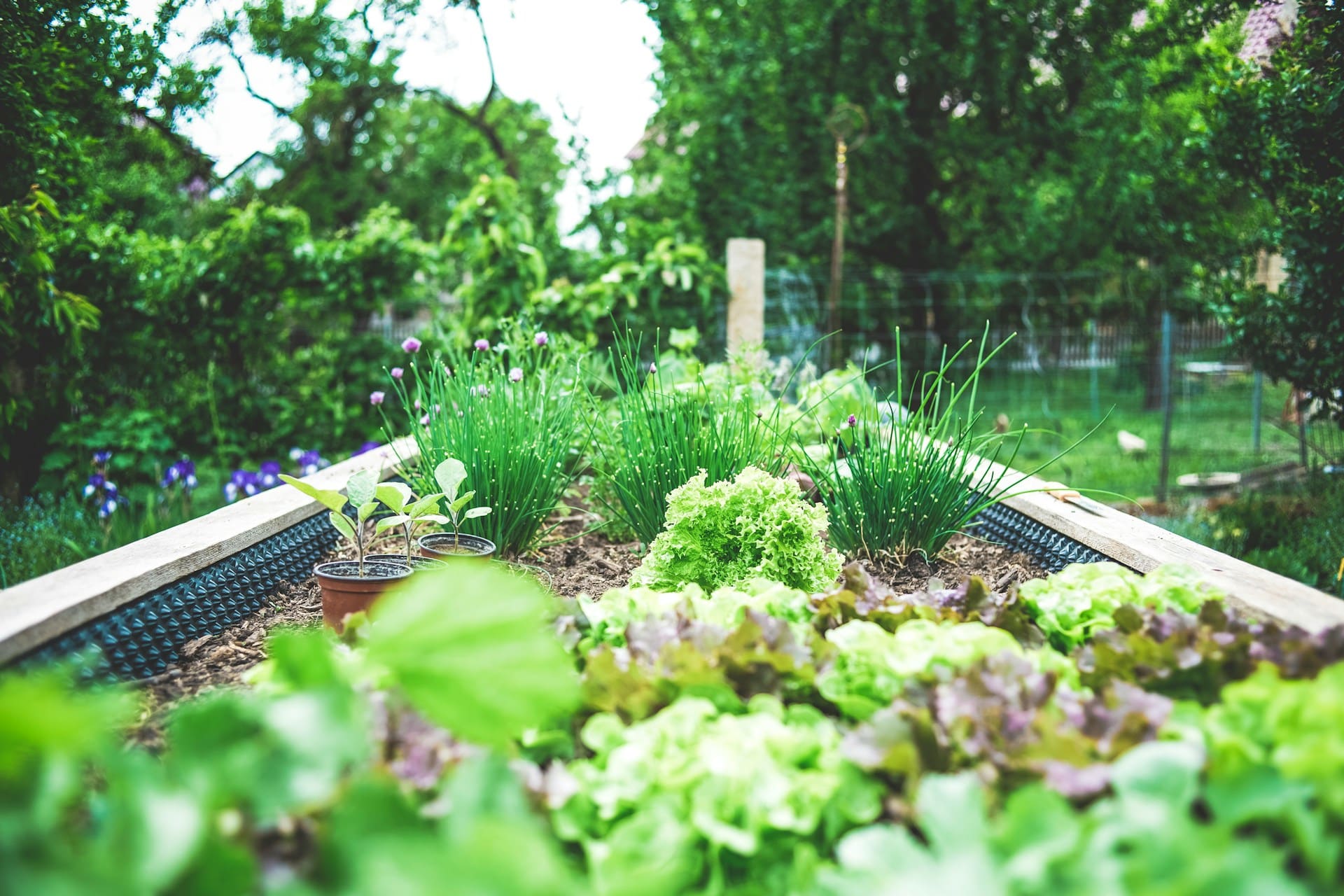

A small backyard vegetable garden works best when it uses vertical space, raised beds, containers, and tight plant spacing instead of relying on wide rows. The goal is growing more food in less square footage, not scaling down what a big garden does.
You don’t need a quarter acre to grow real food. Some of the most productive vegetable gardens fit into a corner of a patio, a strip along a fence, or a handful of containers on a deck. Here are 15 ideas worth trying if your growing space is limited.
Raised Beds Along a Fence Line
A narrow raised bed built along a fence or property line makes use of space that usually sits empty. Two feet of depth is enough for most vegetables, and the vertical backdrop gives climbing plants something to lean on right away.
Vertical Trellis Gardening
Cucumbers, pole beans, and peas take up a fraction of the ground space when trained up a trellis instead of left to sprawl. A simple A-frame or wall-mounted trellis can double the growing capacity of a small bed without adding an inch of footprint.
Square Foot Gardening
Dividing a raised bed into one-foot squares, each planted with a different crop, packs far more variety into a small area than traditional rows. This method also makes it easier to rotate crops and stagger harvests throughout the season.
Container Gardening on a Patio
Tomatoes, peppers, herbs, and salad greens all grow well in containers, which makes a patio, balcony, or driveway edge a legitimate growing space. Bigger containers, at least five gallons for most vegetables, hold moisture better and support stronger root systems.
Stacked Planters for Vertical Growing
Tiered or stacked planters let you grow multiple layers of vegetables in the same footprint a single bed would take. Strawberries, lettuce, and herbs do especially well in these setups since their roots stay shallow.
Hanging Baskets for Trailing Vegetables
Cherry tomatoes, small peppers, and trailing herbs can be grown in hanging baskets, freeing up ground and container space for larger plants. Hanging baskets also keep low-growing pests away from tender leaves.
Keyhole Garden Beds
A keyhole bed is a circular raised bed with a notch cut in from the edge, giving access to a central composting basket. The design keeps every part of the bed within arm’s reach while feeding the soil continuously from the middle out.
Interplanting Companion Crops
Planting fast-growing crops like radishes between slower ones like tomatoes fills gaps in the soil that would otherwise sit empty for weeks. Companion planting like this squeezes extra harvests out of the same bed without expanding it.
Vertical Pallet Gardens
An upright wooden pallet, lined and filled with soil, works as a space-saving planter for lettuce, herbs, and strawberries. Leaned against a wall or fence, it turns a flat vertical surface into growing space that would otherwise go unused.
Window Boxes for Herbs and Greens
Window boxes mounted under a kitchen window put fresh herbs and salad greens within reach without using any yard space at all. Basil, parsley, chives, and lettuce all do well in this shallow-soil setup.
Grow Bags for Root Vegetables
Fabric grow bags are a flexible option for potatoes, carrots, and other root vegetables that need loose, deep soil. They can be tucked into corners, moved as the season changes, and folded flat for storage once harvest is done.
A Salad Table for Quick Greens
A raised, shallow box on legs, often called a salad table, holds just enough soil depth for lettuce, spinach, and other quick greens. It sits at waist height, which also keeps the bed easier on the back during planting and harvesting.
Espalier Fruit Trees Along a Wall
While not a vegetable in the traditional sense, espaliered dwarf fruit trees trained flat against a wall or fence use almost no ground space while still producing a real harvest. Pairing one with a small vegetable bed rounds out a backyard growing space nicely.
A Spiral Herb Garden
A spiral-shaped raised bed built from stacked stone or brick creates several microclimates in one small footprint, from sunny and dry at the top to shaded and moist at the base. Herbs with different water needs can all grow together in the same structure.
Straw Bale Gardening
Straw bales, arranged in a small cluster and conditioned before planting, act as both container and growing medium. As the straw breaks down over the season, it feeds the plants directly, and the whole setup can be composted once harvest wraps up.
Making the Most of a Small Space
A few habits make any of these ideas work better in practice:
- Choose compact or dwarf varieties bred for containers and small beds instead of standard-sized plants.
- Stagger plantings every couple of weeks so the whole harvest doesn’t arrive at once.
- Prune and train vining plants regularly to keep them from swallowing neighboring beds.
- Refresh soil or compost between plantings, since small spaces deplete nutrients faster than large garden beds.
- Group plants by water needs so a single watering routine covers the whole space efficiently.
Planning Layout Before You Plant
A little planning up front saves a lot of reworking later, especially when space is tight and every square foot needs to earn its place.
Start by tracking sunlight across the yard for a full day before deciding where beds or containers go. Most vegetables need at least six hours of direct sun, and a spot that looks bright in the morning can end up shaded by afternoon once trees or fences cast longer shadows. Mapping this out first prevents the common mistake of building a bed in a spot that turns out to be only marginally productive.
Water access matters just as much as sunlight. A small garden spread across containers, hanging baskets, and raised beds in different corners of the yard can turn watering into a daily chore that eats up more time than the garden itself. Grouping plants with similar water needs, or running a simple drip line to containers near a hose bib, keeps maintenance manageable as the season goes on.
Airflow is another detail that gets overlooked in small spaces. Plants packed too tightly together, especially in raised beds or vertical structures, can develop fungal issues faster than plants with a bit of breathing room. Leaving small gaps between containers or thinning seedlings on schedule helps prevent this without giving up much growing space.
Common Mistakes to Avoid in Small Gardens
Even a well-designed small garden can underperform if a few basic details get missed along the way.
- Overcrowding beds: Packing too many plants into a small bed looks efficient early on but often leads to smaller yields per plant once roots start competing for nutrients and water.
- Ignoring mature plant size: A seedling that looks tiny in April can turn into a three-foot-wide plant by July, so it pays to plan for a mature footprint rather than the size at planting time.
- Skipping soil testing: Small beds and containers deplete nutrients faster than large in-ground gardens, and a simple soil test can catch deficiencies before they show up as poor growth.
- Neglecting drainage: Containers and raised beds need proper drainage holes or layers, since standing water causes root rot far more often in confined growing spaces than in open ground.
Final Thoughts
A small backyard doesn’t rule out a real vegetable garden. It just changes the approach, from wide rows to vertical structures, containers, and tightly planned beds that use every inch on purpose. Pick two or three ideas from this list that fit your yard’s layout and sunlight, and a modest space can turn into a surprisingly productive one by the end of the season.
FAQs
What vegetables grow best in a small backyard garden?
Tomatoes, peppers, lettuce, herbs, and bush beans all do well in compact spaces.
Can you grow vegetables without a yard?
Yes, containers, window boxes, and hanging baskets let you grow on patios or balconies.
How much space does a small vegetable garden need?
Even a 4-by-4-foot raised bed can produce a meaningful harvest for a household.
What is the easiest small vegetable garden idea to start with?
Container gardening on a patio is the simplest and most flexible option to begin with.
Do vertical gardens produce as much as traditional rows?
Yes, vertical growing often produces more per square foot than sprawling traditional rows.


