
Starting a garden is exciting. Then you walk into a garden center and see a wall of tools. Hundreds of them. Suddenly, it’s overwhelming, and you have no idea what you actually need.
Here’s the good news. You don’t need most of it. Beginners can grow a thriving garden with just a handful of basic tools. The rest is nice to have, but not necessary.
This guide covers the essential gardening tools every beginner should own. No filler, no gimmicks. Just the gear that earns its place in your shed.
Why the Right Tools Matter
Good tools make gardening easier and more enjoyable. The wrong tools, or none at all, make simple jobs frustrating.
A proper trowel digs a clean hole in seconds. Your bare hands take much longer and leave you sore. Sharp pruners cut cleanly without crushing the plant. Dull scissors damage the stem.
The right tools also last. Cheap, flimsy gear breaks fast and costs more in the long run. A few solid pieces will serve you for years. Buy well once and you’re set.
So let’s get into the basic gardening tools list every beginner needs.
The Must-Have Gardening Tools
These are the core five. If you own nothing else, own these.
Hand Trowel
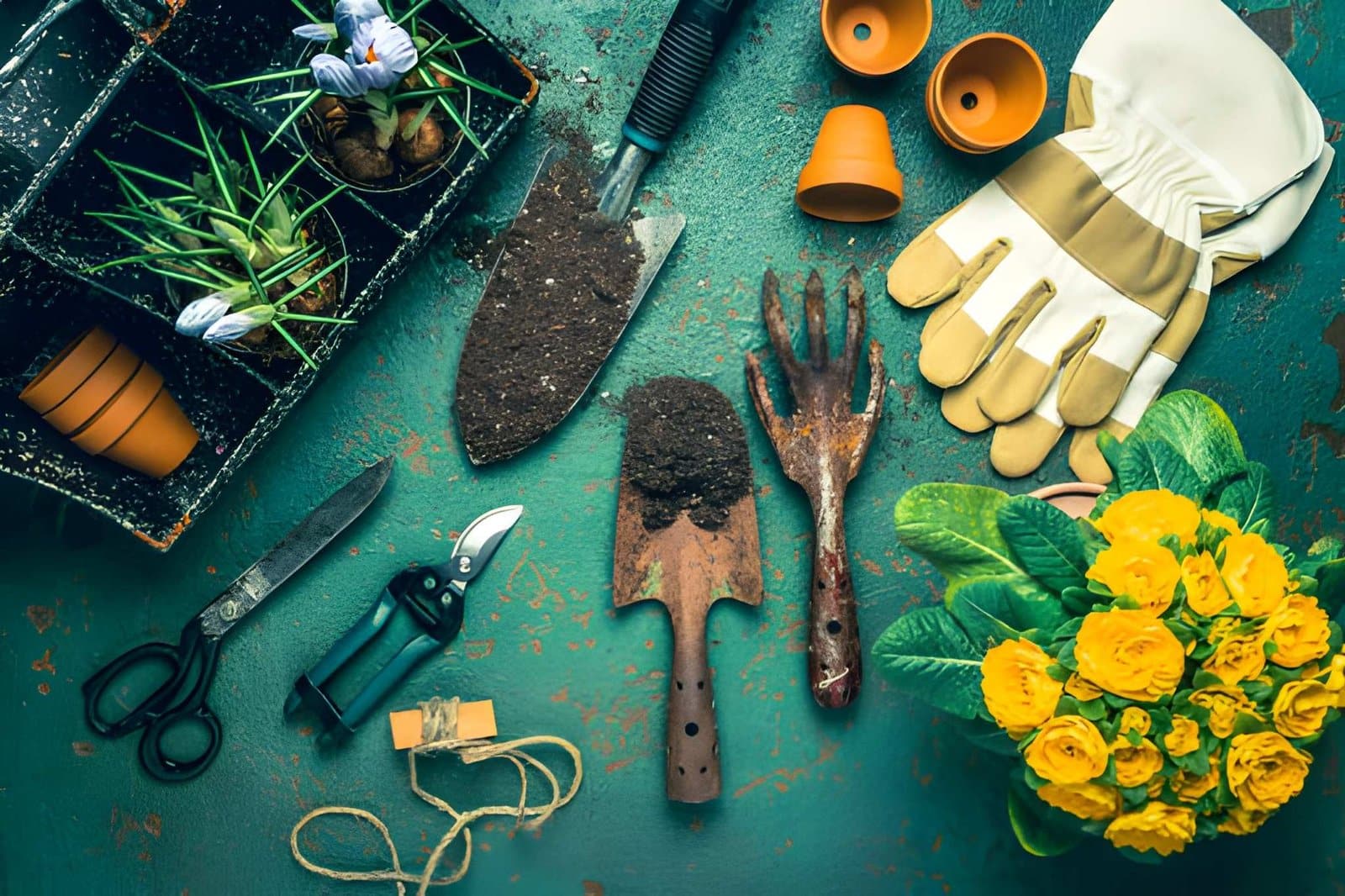
The trowel is the tool you’ll reach for most. It’s a small handheld shovel, perfect for digging holes, planting seedlings, and scooping soil.
Look for one with a sturdy metal head and a comfortable grip. Cheap plastic ones bend the moment they hit hard soil. A stainless steel trowel cuts through the ground with ease and won’t rust.
This single tool handles most of your planting. Start here.
Pruning Shears
Also called secateurs or hand pruners. These are scissors built for plants. You’ll use them to trim stems, cut back growth, deadhead flowers, and harvest vegetables.
Get a bypass type, where two blades pass each other like scissors. They make clean cuts that heal fast. Keep them sharp and they’ll handle almost any trimming job in the garden.
Garden Fork or Hand Cultivator
Soil gets compacted. A garden fork loosens it so roots can breathe and water can drain. It’s also great for turning compost and breaking up clumps.
For smaller beds and containers, a hand cultivator does similar work on a tiny scale. It loosens topsoil and rakes out weeds around your plants. Pick whichever suits the size of your garden.
Watering Can or Hose
Plants need water, so you need a way to deliver it. A watering can works perfectly for small gardens, pots, and containers. Choose one with a removable rose, the sprinkler head, so you can switch between a gentle shower and a steady pour.
For bigger gardens, a hose with an adjustable nozzle saves time and your back. Either way, reliable watering is non-negotiable.
Gardening Gloves
Don’t skip these. Gloves protect your hands from thorns, splinters, blisters, and dirt. They make every job more comfortable.
Get a pair that fits well and lets your fingers move. Thick enough to protect, thin enough to feel what you’re doing. Replace them when they wear through. Your hands are worth it.
A Few More Worth Adding Soon
Once you have the core five, these tools come in handy as your garden grows. They’re not urgent, but they help.
A garden rake. Levels soil, clears debris, and smooths seedbeds. Useful once you’re working larger areas.
A hoe. Slices through weeds fast and breaks up the soil surface. A real time-saver in bigger beds.
A spade or shovel. For heavier digging, edging beds, and moving soil. The bigger sibling of the trowel.
A wheelbarrow or garden cart. Saves countless trips hauling soil, compost, and plants. Your back will thank you.
A kneeling pad. Small comfort, big difference. Saves your knees during long planting sessions.
Add these as you need them. No rush. Your core kit already covers the basics.
How to Choose Good Tools
Buying tools doesn’t have to be confusing. Keep these points in mind.
Pick quality over quantity. Five good tools beat twenty cheap ones. Solid construction lasts and works better.
Check the grip. You’ll hold these for hours. Comfortable handles prevent blisters and strain. Hold a tool before buying if you can.
Go for metal heads. Stainless steel or carbon steel resists rust and bending. Plastic heads snap under pressure.
Match the size to your garden. Container gardener? Stick to handheld tools. Big plot? You’ll want full-size versions too.
Don’t overbuy. Resist the gadgets and specialty tools at first. You can always add more once you know what you actually use.
Caring for Your Tools
Good tools last for years if you look after them. It only takes a minute.
Rinse off soil after each use and dry the tools before storing. Wet metal rusts. Keep blades sharp with a simple sharpening stone, since sharp tools cut cleaner and strain you less.
Store everything in a dry shed or garage, off the ground. Once or twice a year, wipe metal parts with a little oil to prevent rust. Treat your tools well and they’ll serve you season after season.
Building Your Kit on a Budget
Worried about cost? You don’t need to spend a fortune.
Start with just the trowel, pruners, gloves, and a watering can. That’s enough to plant and tend a small garden. Add the rest slowly as your needs grow.
Check secondhand shops and garage sales too. Old metal tools are often better made than new cheap ones. A little cleaning and sharpening brings them right back to life. Smart shopping builds a great kit without the big price tag.
Final Word
You don’t need a shed full of gear to start gardening. Five simple tools get you growing. A trowel, pruners, a fork, a watering can, and gloves. That’s your foundation.
Buy good ones, take care of them, and add more only as your garden grows. Keep it simple and keep it practical.
Get these basics and you’re ready to plant. The garden does the rest.
Frequently Asked Questions
What are the most essential gardening tools for beginners?
A hand trowel, pruning shears, a garden fork or cultivator, a watering can or hose, and gardening gloves. Those five cover most jobs.
Do beginners need expensive tools?
No. A few well-made basics are enough. Quality matters more than price or quantity.
What is the most useful gardening tool?
The hand trowel. You’ll use it constantly for digging, planting, and scooping soil.
What tools do I need for container gardening?
A hand trowel, pruners, gloves, and a watering can are plenty for pots and small spaces.
How do I keep gardening tools in good shape?
Clean and dry them after use, keep blades sharp, store them dry, and oil metal parts occasionally.


