


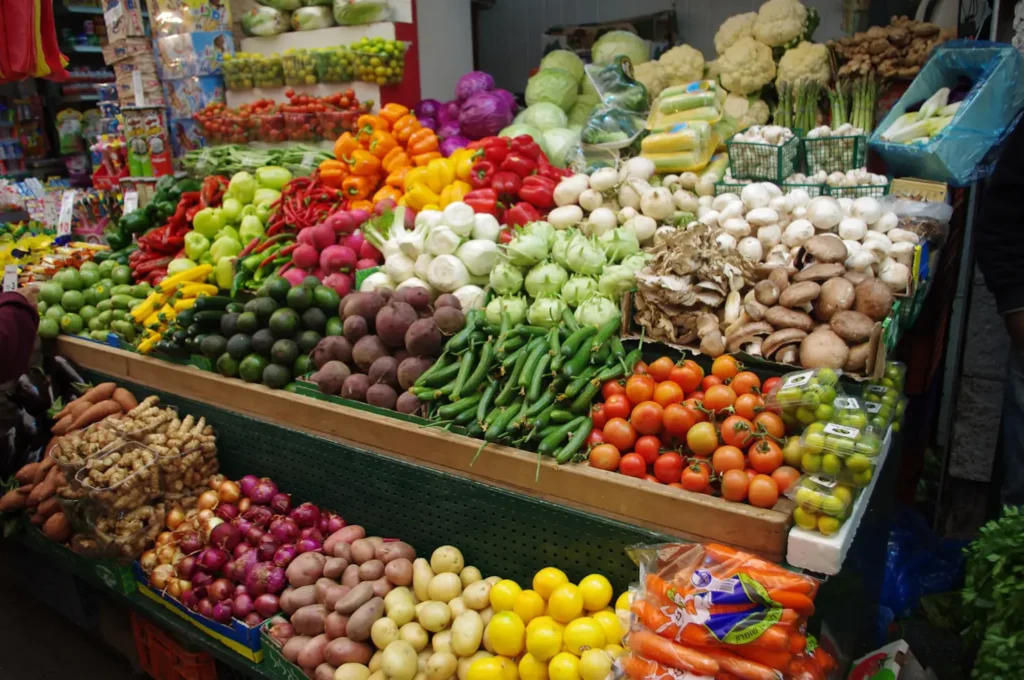
In recent years, the word “organic” has become very common on food labels, in grocery stores, and in conversations about health and the environment. Many people believe organic food is healthier, safer, or better for the planet but what does “organic” actually mean? Is it just a marketing term, or does it have a specific definition?
Organic food refers to how agricultural products are grown, processed, and handled, following strict standards that aim to protect human health, animal welfare, and the environment. Understanding what organic means can help consumers make informed choices about what they eat and why.
The Basic Definition of Organic Food
At its core, organic food is produced using farming methods that avoid most synthetic chemicals. This includes artificial fertilizers, pesticides, herbicides, genetically modified organisms (GMOs), and growth hormones. Instead, organic farming relies on natural processes, biodiversity, and sustainable practices.
In many countries, the term “organic” is legally regulated, meaning farmers and food producers must follow specific rules to label their products as organic. These standards are enforced by government or independent certification bodies.
Organic farming is a direct alternative to modern industrial methods. To fully understand the differences in how our food is produced, it’s helpful to learn what does conventionally grown mean and how it compares to these natural standards.
Organic Farming Practices
Organic farming focuses on working with nature rather than against it. Below are some key practices used in organic agriculture.
1. No Synthetic Pesticides or Fertilizers
Conventional farming often uses chemical pesticides to kill insects and synthetic fertilizers to boost crop growth. Organic farming avoids these chemicals. Instead, farmers use:
- Natural fertilizers like compost or manure
- Crop rotation to maintain soil health
- Beneficial insects to control pests
- Physical barriers or natural sprays made from plants
This reduces chemical residues on food and lowers pollution of soil and water.
2. Healthy Soil Management
Soil health is a central principle of organic farming. Healthy soil produces healthier plants. Organic farmers improve soil quality by:
- Adding organic matter such as compost
- Rotating crops to prevent nutrient depletion
- Using cover crops to prevent erosion
- Avoiding practices that damage soil organisms
This helps maintain long-term fertility and reduces environmental damage.
3. No Genetically Modified Organisms (GMOs)
Organic standards prohibit the use of genetically modified seeds or ingredients. GMOs are plants or animals whose DNA has been altered in a laboratory to resist pests or grow faster. Organic farming relies on traditional breeding methods instead.
4. Animal Welfare in Organic Livestock Farming
Organic standards also apply to animal products such as meat, milk, eggs, and honey. Animals raised organically must:
- Be given organic feed
- Have access to the outdoors
- Not be given growth hormones
- Not receive routine antibiotics
The goal is to allow animals to live in conditions that support their natural behavior and health.
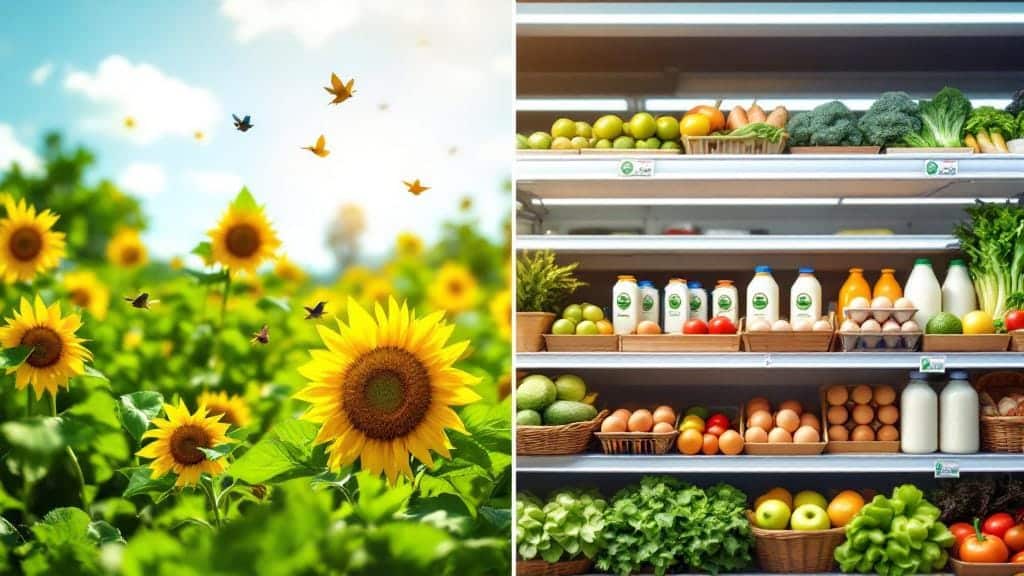

Organic Food Processing
Organic food is not only about farming it also applies to how food is processed and packaged.
- Artificial preservatives, colors, and flavors are limited or banned
- Processing must maintain the food’s natural qualities
- Organic and non-organic ingredients must be clearly separated
For example, an organic cereal must use organic grains and avoid artificial additives.
Organic Certification and Labels
Because “organic” is regulated, products usually must be certified to carry an official organic label.
How Certification Works
- Farmers follow organic standards for a specific period (often 2–3 years)
- Their farms are inspected regularly
- Records of farming practices are reviewed
- Only approved products can be sold as organic
Common Organic Labels
- “100% Organic” – All ingredients are organic
- “Organic” – At least 95% of ingredients are organic
- “Made with Organic Ingredients” – At least 70% organic ingredients
These labels help consumers know exactly what they are buying.
Is Organic Food Healthier?
One of the most common questions is whether organic food is healthier than conventional food.
Potential Health Benefits
- Lower pesticide residues
- Reduced exposure to antibiotics and hormones
- Often fresher due to smaller-scale production
Some studies suggest organic fruits and vegetables may contain slightly higher levels of certain nutrients, such as antioxidants. However, the nutritional differences are generally small.
Important Note
Eating enough fruits and vegetables organic or not is more important than choosing organic alone. A balanced diet matters more than the label.
If you want to dive deeper into the global standards and benefits, you can explore these frequently asked questions about organic agriculture provided by the FAO.
Environmental Benefits of Organic Food
Organic farming is often praised for its environmental advantages.
1. Reduced Pollution
Because organic farming avoids synthetic chemicals, it reduces pollution of:
- Soil
- Rivers and lakes
- Groundwater
This helps protect ecosystems and drinking water.
2. Biodiversity Protection
Organic farms tend to support more plants, insects, birds, and animals. Crop diversity and natural pest control help create healthier ecosystems.
3. Climate Impact
Organic farming can improve carbon storage in soil and reduce energy use, which may help fight climate change. However, organic farming sometimes produces lower yields, which is a challenge for feeding large populations.
Challenges and Criticisms of Organic Food
While organic food has many benefits, it also has limitations.
1. Higher Cost
Organic food often costs more because:
- Farming is more labor-intensive
- Crop yields can be lower
- Certification is expensive
This makes organic food less accessible for some people.
2. Availability
Organic products may not be available everywhere, especially in small towns or developing regions.
3. Not Perfect
Organic does not always mean:
- Completely pesticide-free
- Automatically healthy (organic sugar is still sugar)
- Environmentally perfect
Organic farming still has challenges and continues to evolve.
Organic vs. Natural: Not the Same Thing
Many people confuse “organic” with “natural,” but they are very different.
- Organic: Regulated, certified, specific farming standards
- Natural: Often unregulated, mainly means no artificial ingredients
A product labeled “natural” is not necessarily organic.
Should You Choose Organic?
Choosing organic food is a personal decision based on health concerns, budget, environmental values, and availability.
You might choose organic if:
- You want to reduce pesticide exposure
- You care strongly about environmental protection
- You prefer food produced with stricter animal welfare rules
You might choose conventional food if:
- Organic options are too expensive
- Availability is limited
- You focus on overall diet quality rather than labels
Both choices can be part of a healthy lifestyle. If you want more control over your produce, experimenting with garden food ideas like growing your own organic herbs or small vegetable patches can be a cost-effective way to ensure your family enjoys the freshest, chemical-free food possible.
Organic food is more than just a label it represents a system of farming and food production that emphasizes natural processes, environmental sustainability, and animal welfare. Organic farming avoids synthetic chemicals, GMOs, and routine antibiotics while promoting healthy soil and ecosystems.
Although organic food may offer some health and environmental benefits, it is not a perfect solution, nor is it always accessible to everyone. Understanding what “organic” truly means allows consumers to make informed, balanced choices without being misled by marketing.
In the end, the most important goal is to eat a varied, nutritious diet, respect the environment, and choose food options that align with your values and circumstances organic or not.