


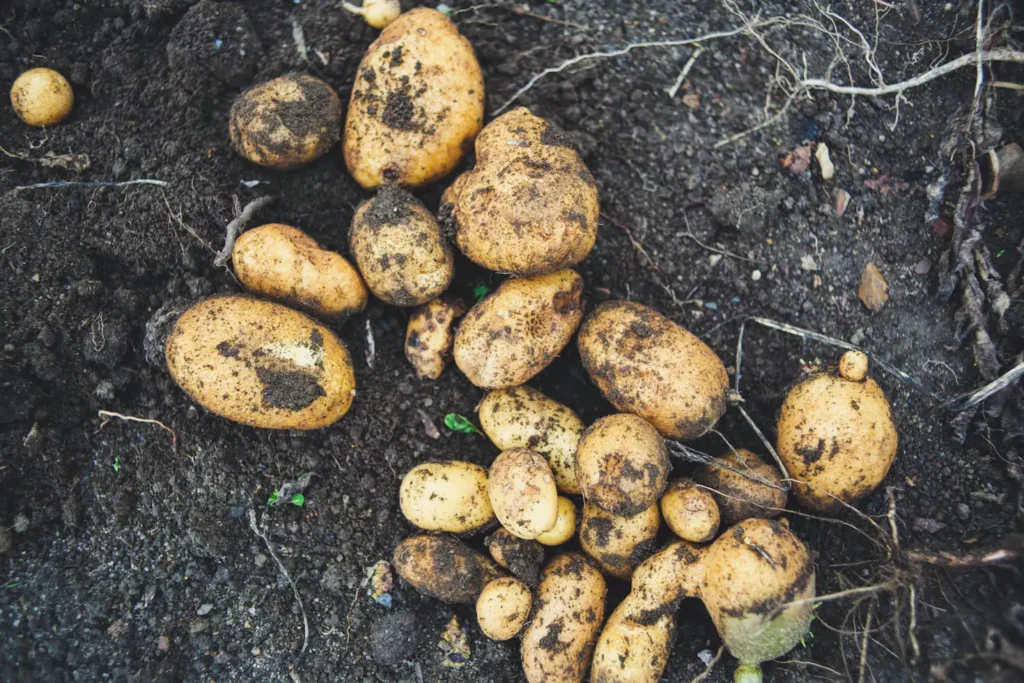
Potatoes are a staple crop in gardens around the world, and they grow surprisingly well in square foot gardening (SFG) systems. SFG is a method that emphasizes efficient use of space, nutrient-rich soil, and intensive planting in small raised beds. With the right planning, potatoes can yield an abundant harvest even in a compact 4×4-foot garden bed. This guide will cover everything you need to know about growing potatoes in SFG, from choosing varieties to planting, care, and harvesting.
What Is Square Foot Gardening?
Square foot gardening, developed by Mel Bartholomew, is a gardening method that divides raised beds into grids to maximize productivity while minimizing labor and space. This innovative approach truly promotes gardening for all, making it accessible for beginners, seniors, or anyone with limited backyard space to grow their own food efficiently.
Key principles:
- Mel’s Mix soil: A blend of 1/3 compost, 1/3 peat moss or coconut coir, and 1/3 coarse vermiculite provides optimal drainage, fertility, and moisture retention.
- Intensive planting: Plants are spaced efficiently to produce more food per square foot.
- Succession planting: Crops are rotated and planted in succession for continuous harvest and soil health.
Potatoes, being compact and productive, are a natural fit for SFG.
Why Potatoes Work Well in Square Foot Gardening
Potatoes are versatile and adapt well to raised beds:
- Efficient space use: You can grow multiple potato plants in a single square.
- Deep soil benefits: Raised beds provide loose, well-draining soil essential for tuber development.
- Reduced pests and diseases: Compact SFG beds make it easier to monitor for issues like blight and pests.
- Continuous production: You can harvest some tubers early (new potatoes) without disturbing the rest of the crop.
Even in small spaces, you can grow enough potatoes to supplement your kitchen for months.
Planning Your Potato Squares
1. Bed Preparation
Potatoes need loose, fertile soil for optimal growth. Prepare your raised bed, at least 12 inches deep, by filling it with Mel’s Mix.
- 1/3 compost: Provides nutrients for tuber formation.
- 1/3 peat moss or coco coir: Retains moisture while remaining airy.
- 1/3 coarse vermiculite: Ensures good drainage to prevent rot.
Potatoes are heavy feeders, so additional compost or organic fertilizer is beneficial.
2. Spacing in SFG
In square-foot gardening:
- 1–2 potato plants per square foot is typical.
- Plant tubers 4–6 inches deep and space 12 inches apart if using larger varieties.
Proper spacing ensures tubers have room to expand while maximizing bed productivity.

Choosing Potato Varieties
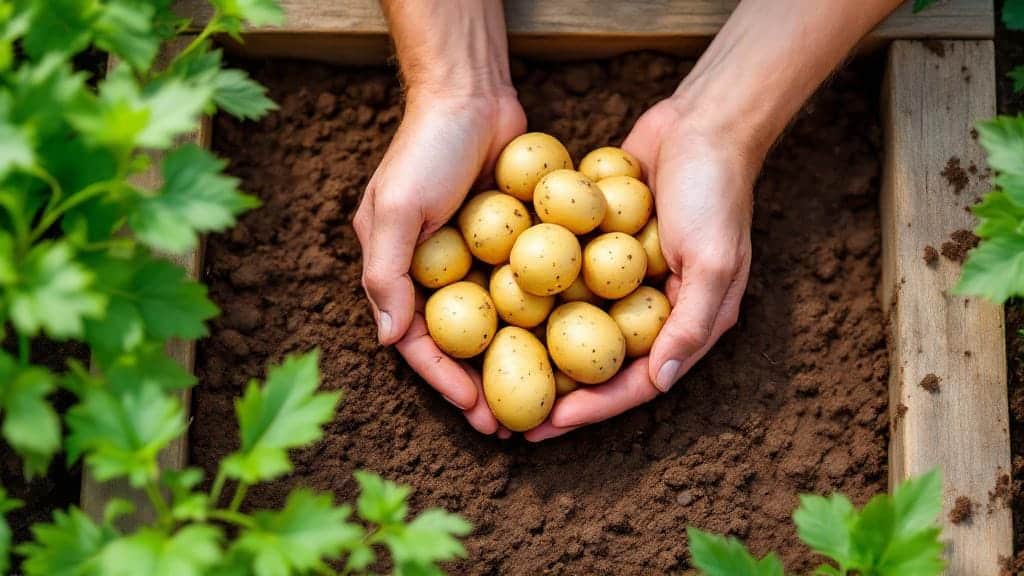
Potatoes are generally categorized as early, mid-season, or late varieties:
- Early potatoes: Mature in 70–90 days; smaller tubers are perfect for early harvest. Examples: ‘Red Norland’ and ‘Yukon Gold.’
- Mid-season potatoes: Take 90–110 days; good balance of yield and storage. Examples: ‘Kennebec,’ ‘Katahdin.’
- Late-season potatoes: Mature in 110–130 days; excellent for storage. Examples: ‘Russet Burbank,’ ‘Red Pontiac.’
Choose varieties based on your climate, storage needs, and desired harvest timing.
Planting Potatoes
Seed Potatoes vs. Grocery Potatoes
Use certified seed potatoes rather than store-bought ones to reduce disease risk.
- Cut larger seed potatoes into pieces with 1–2 eyes per piece.
- Let the cut pieces dry for 24–48 hours to reduce rot.
When to Plant
- Spring planting: Plant 2–4 weeks before the last frost in your region.
- Avoid planting in cold, wet soil, which can lead to rot.
How to Plant in SFG
- Dig a small trench or hole 4–6 inches deep.
- Place the seed potato piece eye-side up.
- Cover with soil and water gently.
- Add mulch (straw or shredded leaves) to conserve moisture and suppress weeds.
Always start with certified seed potatoes and disease management practices to ensure your crop stays healthy and free from soil-borne pathogens.
Care and Maintenance
Watering
Potatoes require consistent moisture, especially during tuber development:
- Water deeply once or twice a week, depending on rainfall.
- Avoid wetting foliage to prevent blight.
- Reduce watering 1–2 weeks before harvest to encourage skin hardening.
Hilling
Hilling is the process of piling soil around potato stems to:
- Protect tubers from sunlight (green tubers are toxic).
- Encourage more tuber formation along the stem.
In SFG, simply mound additional Mel’s Mix or compost around stems when plants are 6–8 inches tall.
Sunlight
Potatoes need full sun, at least 6–8 hours daily. Adequate sunlight ensures strong stems and tuber growth.
Fertilizing
Potatoes are heavy feeders:
- Use compost, worm castings, or a balanced organic fertilizer.
- Avoid excessive nitrogen, which encourages leafy growth over tuber formation.
Companion Planting for Potatoes
Potatoes benefit from strategic companions that improve growth and repel pests:
Good companions:
- Beans, corn, cabbage, and horseradish
- Marigolds can deter nematodes and other pests.
Avoid planting near:
- Tomatoes, peppers, and eggplants, which share pests and diseases with potatoes.
Pests and Diseases
Potatoes can be susceptible to several pests and diseases:
- Colorado potato beetle: Handpick or use organic sprays.
- Blight: Fungal disease affecting leaves and tubers; avoid wet foliage and rotate crops annually.
- Wireworms: Feed on tubers; rotate with non-host crops to reduce infestations.
Regular monitoring and good hygiene prevent most issues.
Harvesting Potatoes
When to Harvest
- New potatoes: Harvest 2–3 weeks after plants flower for tender, small tubers.
- Mature potatoes: Wait until foliage dies back completely for storage potatoes.
How to Harvest
- Gently loosen soil with a garden fork.
- Lift tubers carefully to avoid bruising.
- Brush off excess soil; do not wash before storage.
Curing and Storing
- Cure potatoes in a dark, well-ventilated area at 45–60°F for 1–2 weeks.
- Store in a cool, dark, dry space with good air circulation for 3–6 months, depending on variety.
Store in a cool, dark, dry space with good air circulation for 3–6 months. If you are transitioning to gardening in winter, these stored potatoes can be a great source of homegrown food while your outdoor beds are resting or growing hardier, cold-weather crops.
Maximizing Potato Yield in SFG
- Dense planting: Follow SFG spacing to fit more plants per square foot.
- Hilling regularly: Encourages tuber formation along the stem.
- Succession planting: Plant multiple batches 2–3 weeks apart to extend harvest.
- Companion crops: Rotate with leafy greens or legumes to maintain soil fertility.
- Mulching: Helps conserve moisture, suppress weeds, and regulate temperature.
By following these strategies, even a small 4×4-foot bed can produce a substantial potato harvest.
Once you have harvested your early potatoes, you can follow up with nutrient-dense greens like square foot gardening kale to keep your garden productive throughout the cooler months.
Using Homegrown Potatoes
Homegrown potatoes are more flavorful and versatile than store-bought varieties:
- Culinary: Boil, roast, mash, fry, or bake.
- Preservation: Cure and store for winter use, or freeze cooked potatoes.
- Seed potatoes: Save disease-free tubers for next year’s crop.
The satisfaction of harvesting your own potatoes is unmatched, and SFG makes it possible even with limited space.
Potatoes are an excellent crop for square-foot gardening. Their compact growth, adaptability, and high yield make them ideal for raised bed gardens. By following SFG principles, dense planting, nutrient-rich soil, regular hilling, and careful watering, you can harvest more potatoes per square foot than in traditional row planting.
With proper planning and care, a small raised bed can provide enough potatoes to feed your family and store for months. Whether planting early varieties for spring harvest or late-season potatoes for winter storage, SFG allows you to enjoy fresh, homegrown spuds with minimal effort and maximum efficiency.