


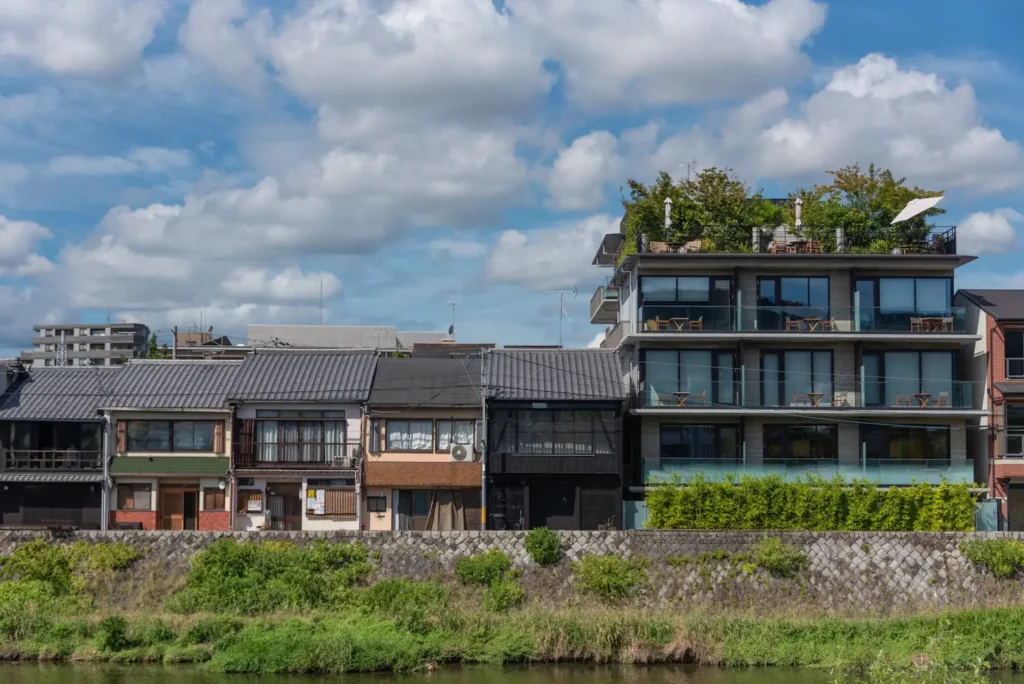
If you’re wondering how to design rooftop gardens, you’re not alone. As urban spaces grow denser, rooftops are becoming valuable real estate for green spaces. A well-designed rooftop garden offers a peaceful escape, environmental benefits, and added property value. However, creating a functional garden roof isn’t as simple as placing plants on a roof. You must consider structure, drainage, sun exposure, and plant choice. Whether you’re looking to create a personal retreat or a shared green space, this guide will help you design rooftop gardens that are both beautiful and practical. Let’s explore the key elements to get you started.
Understanding the Basics of Rooftop Garden Design
To successfully design rooftop gardens, it’s important to understand their foundational elements. A rooftop garden typically includes planters, lightweight soil, vegetation, and sometimes seating or shade structures. The goal is to create a functional green space without overburdening the building. Safety, accessibility, and environmental conditions are key considerations for any garden roof top. Whether you’re creating a simple container garden or a fully landscaped rooftop, a thoughtful layout is essential. When you design a rooftop gardens, you’re not just adding greenery you’re building an elevated ecosystem that requires strategic planning and design expertise.
Benefits of Designing a Rooftop Garden in Urban Spaces
When you design rooftop gardens in cities, the benefits are substantial. These gardens help reduce urban heat, filter air pollution, and promote biodiversity. For property owners, they can also improve building insulation and reduce energy costs. Additionally, rooftop gardens offer residents a private oasis amidst the concrete jungle. Creating a personal rooftop home garden can also serve as a community space, encouraging interaction and urban farming. They can also serve as community spaces, encouraging interaction and urban farming. Beyond aesthetics, when you design a rooftop gardens, you’re investing in wellness, sustainability, and long-term value for your property and your environment.
Key Structural Considerations Before Building a Rooftop Garden
Before you design a rooftop gardens, it’s critical to assess the structural capacity of your building. Rooftops must be able to support the combined weight of soil, plants, water, and any furniture or hardscaping. Hiring a structural engineer to evaluate load-bearing capacity is highly recommended. Waterproofing and drainage systems should be integrated into the initial design to prevent leaks. Safety railings and access points must also be considered. When planning to design rooftop gardens, ensure your structure meets local codes and can support your garden safely.
Before adding any weight to your roof, it is vital to ensure there are no existing leaks or structural weaknesses; consulting a professional for roof repair in Pleasant Garden can help secure your building’s foundation before you begin your garden roof project. A stable and leak-proof structure is the first step toward a successful elevated green space.
Choosing the Right Plants for Your Rooftop Garden
Selecting the appropriate plants is crucial when you design rooftop gardens. Since rooftops are often exposed to intense sunlight and wind, hardy plants that can tolerate these conditions are ideal. Native grasses, succulents, herbs, and drought-resistant perennials work well. For shade areas, ferns and hostas may thrive. If you want to grow food, consider compact vegetable varieties or vertical planters. It’s important to group plants with similar water and light needs together. To design a rooftop gardens that flourishes, choose plants that suit your local climate and micro-conditions.

How to Plan Drainage and Irrigation Systems for Rooftop Gardens
Proper water management is essential when you design rooftop gardens. A good drainage system prevents water accumulation that can damage plants or the roof structure. Most rooftop gardens use lightweight growing mediums and raised beds with built-in drainage layers. Irrigation can be manual or automatic, but a drip system is often most efficient. It delivers water directly to the roots and minimizes waste. Rainwater harvesting is also a sustainable option. To successfully design a rooftop gardens, you must balance water retention with runoff to keep both plants and your building healthy.
Incorporating Seating, Shade, and Comfort Into Your Garden Design
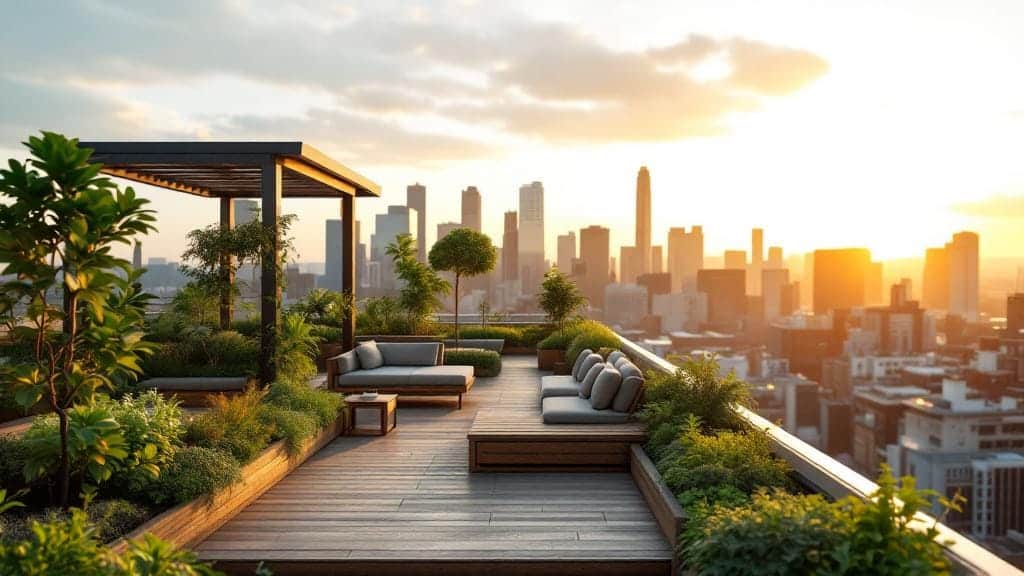
To fully enjoy the space, you’ll want to design rooftop gardens that are not only green but also comfortable. Incorporate weather-resistant seating areas, pergolas, umbrellas, or retractable awnings for shade. Lightweight furniture and planters are preferable to avoid overloading the roof. Soft elements like outdoor cushions or rugs add warmth and make the garden more inviting. Lighting and small décor features can enhance evening use. If your goal is to design a rooftop gardens for relaxation or entertainment, prioritizing comfort is just as important as the plants.
Designing for Sun, Wind, and Weather on Rooftop Gardens
Rooftops are exposed to extreme conditions: full sun, strong winds, and temperature fluctuations. When you design rooftop gardens, factor in environmental conditions. Use windbreaks like trellises or hedges to protect plants and create a calmer space. Position seating in shaded or semi-shaded zones and consider using UV-resistant materials. Reflective surfaces and potted plants can be used strategically to manage heat. If you want to design a rooftop gardens that thrives, you must understand and work with your microclimate, not against it.
Sustainable Materials and Eco-Friendly Design Tips for Rooftop Gardens
Sustainability should be a core goal when you design rooftop gardens. Choose recycled or reclaimed materials for decking and furnishings. Use organic soil and natural fertilizers to support plant health without chemicals. Incorporating solar lighting, composting systems, and rainwater collection further enhances your garden’s eco-friendliness. Native plants are not only easier to maintain but also support local ecosystems. Whether your goal is beauty or food production, a sustainable mindset helps you design a rooftop gardens that is both responsible and long-lasting.
Creative Layout Ideas for Small and Large Rooftop Gardens
Space constraints don’t have to limit your creativity. When you design rooftop gardens, vertical gardening, hanging planters, and raised beds can maximize small areas. Use multi-functional elements—like benches with built-in storage or planter dividers to save space. For larger rooftops, divide the garden into zones for dining, lounging, and growing. Walkways, focal points, and layered planting create visual interest. No matter the size, you can design a rooftop gardens that is both practical and inspiring with the right layout and imagination.
Maintenance Tips to Keep Your Rooftop Garden Thriving Year-Round
Once you design rooftop gardens, regular maintenance is key to keeping them healthy and beautiful. Monitor plant health, soil moisture, and pests regularly. Seasonal tasks like pruning, fertilizing, and replanting are essential. Clean drainage systems to avoid water buildup and inspect for leaks or structural wear. Choose low-maintenance plants and invest in self-watering systems if needed. A rooftop garden may be out of sight, but it should never be out of mind. With ongoing care, the rooftop gardens you design can thrive through every season.