
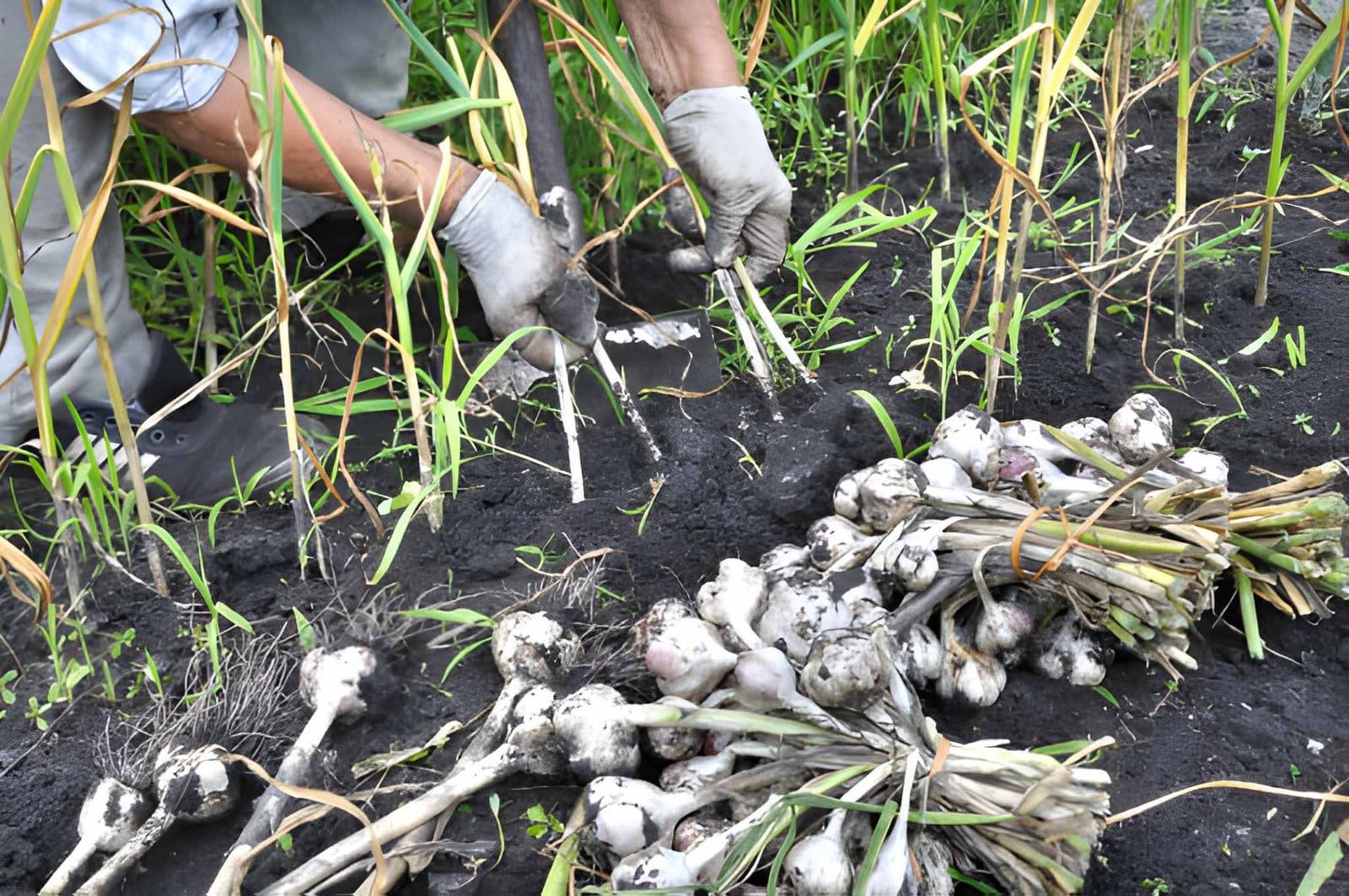

You planted garlic months ago. The leaves are tall. The bulbs are swelling somewhere down in the soil. Now the big question hits. How do you know when garlic is ready to pull?
Get the timing right, and you’ll dig up plump, tight bulbs that store for months. Pull too early, and the cloves stay small and underdeveloped. Wait too long and the bulbs split apart, lose their wrappers, and rot fast in storage.
The good news is that garlic gives clear signals. You just need to know what to look for. This guide walks you through every sign, so you harvest at the perfect moment.
The Short Answer
Garlic is usually ready when the lower leaves turn brown, but several upper leaves stay green. That’s the headline signal. Most gardeners harvest in early to midsummer, often late June through July, depending on climate and planting time.
But the leaves alone don’t tell the whole story. Let’s go through all the signs together.
How to Know When to Harvest Garlic: The Leaf Test
The leaves are your main clue. Here’s why.
Each garlic leaf connects to a layer of papery wrapper around the bulb. As the lower leaves die back, those wrappers start to break down. So the leaves act like a countdown clock for the bulb below.
When the bottom three or four leaves turn brown and dry, but five or six upper leaves are still green, that’s your window. The bulb is mature and the wrappers are still intact.
Count the green leaves. Each green leaf means a protective layer is still wrapping the bulb. You want a few of those wrappers left so the garlic stores well.
Don’t wait for all the leaves to die. By then, the wrappers have split and the bulb is past its best.
When Is Garlic Ready to Harvest? More Signs to Check
The leaf test is the big one. But these extra signs confirm it.
Browning from the bottom up. Healthy garlic dies back in order. Lowest leaves first, working upward. When the lower third has gone brown, start watching closely.
Firm, full bulbs. Gently feel the soil around the top of a bulb. It should feel plump and rounded, not flat or soft.
The calendar. Garlic takes roughly eight to nine months from planting. Fall-planted garlic is usually ready in early summer. If you planted last October, watch from June onward.
Scapes are already gone. Hardneck garlic sends up a curly flower stalk called a scape in late spring. Most gardeners snip these off to push energy into the bulb. Once the scapes have come and gone, harvest follows a few weeks later.
The Test Dig
Still unsure? Do a test dig. This is the most reliable check of all.
Pick one plant that looks ready. Loosen the soil around it and lift it out carefully. Look at the bulb.
A ready bulb is plump and divided into clear, full cloves. The wrappers are tight and papery. If you can feel the individual cloves bulging through the skin, it’s done.
If the bulb is still small and smooth with no clear clove division, rebury it gently and wait another week or two. One test dig saves your whole crop from bad timing.
Garlic Harvest Time Signs at a Glance
Quick checklist before you dig the whole patch.
The lower three or four leaves brown and dry. Five or six upper leaves are still green. Bulbs feel firm and full in the soil. Scapes have already been removed. It’s been around eight months since planting. A test dig shows tight, well-divided cloves.
When most of these line up, it’s time.
What Happens If You Wait Too Long
Timing cuts both ways. Pulling late causes real problems.
Overripe garlic bulbs burst their wrappers. The cloves spread open like a flower. These bulbs look fine at first, but store terribly. Without their papery layers, they dry out and rot within weeks.
So if you’re ever torn between pulling now or waiting, lean toward now. Slightly early beats badly late.
Pulling Garlic Without Damage
This part matters more than people think. Yank garlic out by the stem and you’ll bruise bulbs, snap necks, and ruin storage life. Do it gently instead.
Loosen first. Never pull straight up from dry, hard soil. Use a garden fork to loosen the ground a few inches away from the bulb. Lift from underneath.
Lift, don’t yank. Once the soil is loose, ease each bulb out by hand. Support the bulb, not just the leaves.
Keep them whole. Brush off loose dirt, but don’t wash the bulbs or rub them hard. The skins are delicate right now.
Water timing helps. Stop watering about a week before harvest. Drier soil lifts cleaner and the bulbs start curing sooner.
Handle with care. Bruised garlic rots. Treat each bulb like an egg until it’s cured.
Curing After the Harvest
Pulling is only half the job. Curing locks in storage life.
Move the harvested garlic somewhere dry, shaded, and airy. A garage, shed, or covered porch works well. Avoid direct sun, which scorches the bulbs.
Leave the leaves and roots on. Lay the plants out or tie them in small bundles and hang them. Let them cure for two to four weeks.
You’ll know curing is done when the necks are dry and tight, and the outer skins are papery. Then trim the roots, cut the stems, and store your garlic in a cool, dark spot.
Final Word
Knowing when to pull garlic comes down to reading the leaves. Lower ones are brown, upper ones are still green. That’s your signal. Back it up with a quick test dig, and you’ll never guess wrong.
Then lift gently, cure well, and store cool. Do that, and your garlic keeps for months.
Watch the plant in the garden. It tells you exactly when it’s ready. You just have to listen.
Frequently Asked Questions
How do you know when garlic is ready to harvest?
The lower leaves turn brown while several upper leaves stay green. That’s the main sign that the bulbs are mature.
When is garlic ready to harvest?
Usually early to midsummer, around eight to nine months after fall planting. Late June through July is common.
Can you harvest garlic too early?
Yes. Early bulbs are small with poorly formed cloves. Do a test dig to check before pulling the whole crop.
Should you wash garlic after pulling?
No. Just brush off loose soil. Washing adds moisture that causes rot during curing.
How long does garlic need to cure?
Two to four weeks in a dry, airy, shaded space until the necks and skins are fully dry.


