

Hydroponics has become one of the most efficient and innovative ways to grow plants without soil, offering faster growth rates, higher yields, and complete control over the growing environment. But before you can enjoy a thriving hydroponic garden, you must begin with the most essential step: starting seeds the right way. Luckily, starting seeds in a hydroponic system is simple, clean, and highly successful when done correctly. This comprehensive guide explains how to start seeds for hydroponics, the materials you’ll need, step-by-step instructions, troubleshooting tips, and best practices to ensure your seedlings thrive.
Why Start Seeds for Hydroponics Instead of Buying Seedlings?
While you can purchase seedlings from a nursery and transplant them into a hydroponic system, starting seeds directly offers several advantages:
1. Better Root Health
Seedlings grown in soil often carry soil particles and pathogens that can harm hydroponic systems. Seeds started in a sterile hydroponic medium grow cleaner, healthier roots.
2. Full Control From Day One
Starting from seed allows you to control:
- Lighting
- Humidity
- Water quality
- Nutrient timing
This leads to strong, uniform seedlings.
3. Cost-Effective
Seeds are far cheaper than nursery-grown plants. Hydroponic seed-starting uses only small amounts of materials.
4. Wider Plant Variety
You can grow any variety you like, including rare or specialty cultivars not commonly found in stores.
What You Need to Start Seeds for Hydroponics
Starting seeds hydroponically requires only a few basic tools and materials. Stocking up on the right indoor gardening supplies before you begin ensures that you won’t face any delays during the critical germination phase. Here’s a detailed list:
1. Seed Starting Trays or Humidity Domes
These help maintain warmth and moisture, two critical conditions for germination.
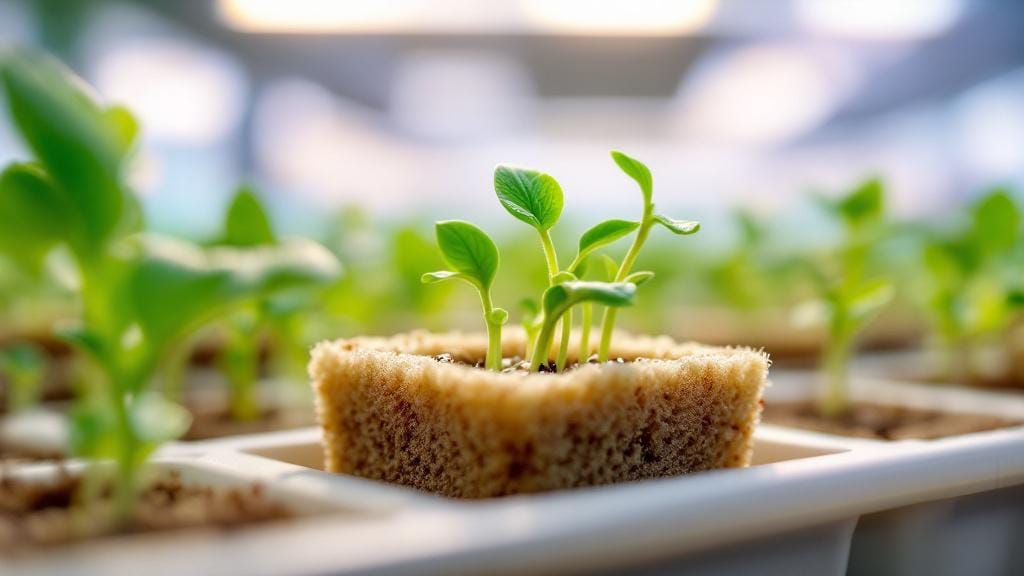
2. Hydroponic Growing Medium
Unlike soil, hydroponic media are sterile and water-retentive. The best options include:
- Rockwool cubes
- Coco coir pellets
- Rapid Rooter plugs
- Starter sponges
- Oasis cubes
3. pH-Balanced Water
Seeds are sensitive, so water used for germination should have a pH of 5.5 to 6.0.
4. Spray Bottle
Ensures gentle watering that won’t disturb seeds.
5. Seeds
Choose fresh, high-quality seeds labeled for hydroponics when possible, especially lettuce, herbs, tomatoes, peppers, and leafy greens.
6. Heat Mat (Optional but Helpful)
Maintains a stable germination temperature of 70–78°F (21–25°C).
7. Grow Lights
Young seedlings require 14–16 hours of light per day after sprouting.
Step-by-Step Guide: How to Start Seeds for Hydroponics
Below is a clear, beginner-friendly process you can follow for almost any hydroponic system.
Step 1: Prepare the Growing Medium
Before placing seeds, make sure your chosen medium is properly prepared.
Rockwool Cubes
Rockwool must be pH-adjusted because its natural pH is too high.
- Soak cubes in water with a pH of 5.5 for 20–30 minutes
- Lightly shake out excess water; don’t squeeze it.
Rapid Rooters or Coco Pellets
These usually come pre-pH-balanced, so simply:
- Hydrate if necessary
- Ensure they’re moist but not soggy
The medium should be damp like a wrung-out sponge, never dripping wet.
Step 2: Place Seeds in the Starter Plug
Use a clean pair of tweezers or your fingers.
- Place 1–2 seeds in each starter plug or cube
- Insert them about ¼ inch deep
- Cover lightly with the medium (if needed)
Many growers place two seeds per cube to ensure germination. If both sprout, you can thin them later.
Step 3: Add Water (No Nutrients Yet)
Moisten the cubes with plain pH-balanced water only.
Important: Do not add nutrients at this stage.
Seeds contain everything they need to sprout; nutrients too early can burn delicate roots.
Use a spray bottle to avoid overwatering. The goal is moisture, not saturation.
Step 4: Create the Ideal Germination Environment
Place the cubes in a seed tray and cover with a humidity dome. This helps the seeds stay warm and moist.
Ideal conditions for germination:
- Humidity: 70–90%
- Temperature: 70–78°F (21–25°C)
- Light:
- Seeds do not need light until they sprout.
- However, placing them under grow lights early can encourage strong growth the moment they germinate.
A heat mat can significantly improve germination rates in cool environments.
Step 5: Monitor Daily and Maintain Moisture
Check your seeds every day. The medium should stay lightly moist at all times.
If it feels dry:
Spray lightly with pH-adjusted water.
If it feels too wet:
Remove the humidity dome for a few hours to allow airflow.
Too much water can cause the following:
- Mold growth
- Damping-off disease
- Lack of oxygen in the root zone
Consistency is key.
Step 6: Give Light Once Sprouts Appear
Once seedlings emerge, they need intense but gentle grow lights to fuel their photosynthesis. Setting up high-efficiency led grow lights for indoor gardening will provide the perfect spectrum without overheating your delicate sprouts
Provide:
- 14–16 hours of light per day
- Light positioned 4–8 inches above the seedlings
- Gradually raise the light as plants grow
Without adequate light, seedlings may become leggy and weak.
Step 7: Introduce Mild Nutrient Solution
About 7–10 days after sprouting, roots begin emerging from the bottom of the starter cube. This is when seedlings are ready for the weakest nutrient solution.
Use:
- A nutrient mix at 25% strength
- pH between 5.5 and 6.0
You can bottom-water the tray or mist lightly.
Avoid strong nutrients at this stage; young roots are extremely delicate.
Step 8: Transition Seedlings to the Hydroponic System
Seedlings are ready to move into their hydroponic system when:
- They are 2–3 inches tall
- They have 2–3 strong sets of true leaves
- Roots are visible and at least ½ inch long
Simply place the starter cube into the net pot and cover lightly with additional growing medium (like clay pebbles).
Then:
- Add nutrient solution at 50–75% strength
- Ensure proper water circulation
- Maintain a pH around 5.8
- Gradually increase nutrient strength as seedlings mature
Congratulations, your hydroponic crop is officially growing!
Best Seeds to Start in Hydroponics
Some plants germinate and adapt to hydroponic environments more easily than others. If you’re looking for the best herbs that can be grown hydroponically, you’ll find that they often have the highest success rates during the germination phase.
Beginners should start with:
- Lettuce
- Basil
- Oregano
- Mint
- Spinach
- Kale
- Arugula
Intermediate-level hydroponic seeds:
- Tomatoes
- Peppers
- Cucumbers
- Strawberries
Not ideal for hydroponic seed starting:
- Root crops (carrots, beets, turnips)
- Large plants requiring deep soil support
Common Mistakes When Starting Seeds for Hydroponics
Avoid these beginner pitfalls to ensure success:
1. Overwatering
Too much water suffocates the seed and causes mold. Keep the medium damp, not soaked.
2. Adding Nutrients Too Soon
Nutrients should not be added until seedlings develop true leaves.
3. Wrong pH Levels
Seeds and seedlings are extremely sensitive. Always maintain a pH between 5.5 and 6.0.
4. Insufficient Light
Without enough light, seedlings grow tall, weak, and floppy.
5. Transplanting Too Early
Seedlings need a strong root system before entering the hydroponic system. Rushing this step leads to transplant shock.
Tips for Success When Starting Seeds in Hydroponics
- Use fresh, high-quality seeds with good germination rates.
- Keep your workspace sterile to reduce mold and fungi.
- Pre-soak hard seeds (like peas) for faster germination.
- Label each cube to track plant varieties.
- Always ventilate the humidity dome once seeds sprout.
Small details make a big difference in hydroponic success.
Learning how to start seeds for hydroponics is the foundation for a healthy, productive hydroponic garden. With the right growing medium, proper pH-balanced water, stable light, and consistent moisture, seeds germinate quickly and produce strong, vibrant seedlings ready for transplant. Whether you’re growing leafy greens, herbs, or fruiting plants, these steps ensure your hydroponic system gets off to the best possible start.
Now that you know how to start seeds, learn more about your setup in our guide on Hydroponics vs. Aquaponics.


