

Basil is one of the most popular herbs in the world, fragrant, flavorful, and easy to grow. Whether you use it in pesto, salads, or sauces, fresh basil elevates almost any dish. Fortunately, you don’t need a large garden to enjoy a constant supply of this aromatic herb. With square foot gardening, you can grow plenty of basil even in the smallest of spaces.
This method makes it simple to plan, plant, and maintain an abundant herb garden while conserving soil, water, and time. In this guide, you’ll learn everything you need to know about growing basil in a square foot garden, from preparing the bed to harvesting lush, healthy leaves.
What Is Square Foot Gardening?
Square foot gardening (SFG) is a highly efficient planting system developed by Mel Bartholomew in the 1980s. It divides a raised garden bed into 1-foot by 1-foot sections (squares). Each square is planted according to the crop’s space needs, creating a dense, organized layout that maximizes yield in minimal space.
Instead of rows, SFG uses a grid. Each square can host a different plant, which allows for easy crop rotation, companion planting, and efficient resource use. It’s perfect for urban gardeners, beginners, or anyone who wants to grow more with less.
Why Basil Thrives in a Square-Foot Garden
Basil is practically tailor-made for the square-foot gardening method. Here’s why:
- Compact Growth: Most basil varieties grow upright rather than sprawling, fitting neatly into one square.
- High Yield: Even a few plants can produce an abundance of leaves throughout the season.
- Companion Friendly: Basil pairs beautifully with other plants, especially tomatoes, peppers, and lettuce.
- Low Maintenance: Once established, basil requires minimal care beyond regular watering and harvesting.
- Continuous Harvest: With frequent pinching and pruning, basil keeps producing all season long.
Planning Your Basil Square-Foot Garden
Basil loves warmth and sunshine, making it a perfect candidate for rooftop setups. By incorporating roof gardening techniques into your square foot garden, you can maximize vertical space and sunlight even in the heart of the city. Choose a spot that gets at least 6–8 hours of direct sunlight per day.
1. Choosing the Right Location
Basil loves warmth and sunshine. Choose a spot that gets at least 6–8 hours of direct sunlight per day. In cooler climates, placing your bed near a south-facing wall can help trap extra heat.
2. Building the Bed
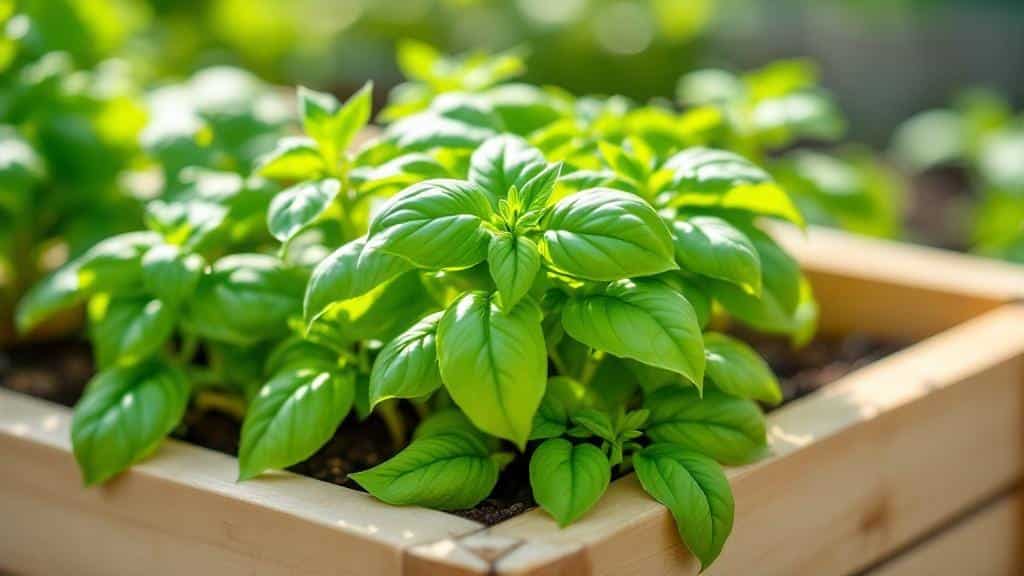
A classic square-foot garden is a raised bed measuring 4 feet by 4 feet, divided into 16 equal squares. You can adjust the size to fit your space. The bed should be at least 6–12 inches deep to allow root growth.
Use untreated wood, composite boards, or other non-toxic materials to build the frame. Avoid pressure-treated lumber, which may leach chemicals into the soil. If you’re struggling to find the right materials, many specialized square foot gardening store locations or online platforms offer pre-cut, food-safe cedar kits that make assembling your frame quick and foolproof.
3. Preparing the Soil Mix
The key to a successful SFG is Mel’s Mix, a nutrient-rich, well-draining blend:
- 1/3 peat moss or coco coir
- 1/3 vermiculite
- 1/3 blended compost
This mix retains moisture while providing excellent drainage and fertility, ideal conditions for basil roots. If possible, use compost from several sources (like mushroom, worm, and plant composts) for a balanced nutrient profile.
How Many Basil Plants per Square Foot?
Basil’s spacing requirements depend on the variety:
- Genovese or Sweet Basil: 2 plants per square
- Smaller varieties (like Spicy Globe or Greek Basil): up to 4 plants per square
- Large-leaf or bush types: 1 plant per square
Avoid overcrowding. Proper airflow reduces disease risk and encourages healthier growth.
For a complete guide to basil varieties and care, it’s helpful to know that different types, like Thai or lemon basil, may have slightly different growth habits.
Planting Basil: Seeds vs. Transplants
Starting from Seed
Basil seeds germinate easily, so you can start them indoors 4–6 weeks before your last frost date. Sow seeds about ¼ inch deep in seed trays. Once seedlings develop two sets of true leaves and temperatures stay above 50°F (10°C) at night, they’re ready for transplanting.
Using Transplants
If you prefer convenience, buy young basil plants from a nursery. Choose sturdy, green seedlings without yellowing leaves or root-bound signs.
When transplanting, gently loosen the roots and plant them at the same depth as they grew in the container. Water well to help them settle in.
Companion Planting with Basil
Square foot gardening makes companion planting simple, and basil has some of the best pairings in the garden.
Good companions:
- Tomatoes: Basil enhances tomato flavor and deters pests like aphids and whiteflies.
- Peppers: Both enjoy similar growing conditions, and basil may improve pepper yield.
- Lettuce and spinach: Basil’s scent can help repel certain pests that target leafy greens.
- Marigolds: Add marigolds to nearby squares for natural pest control.
Avoid planting near:
- Cucumbers: They may stunt basil’s growth.
- Sage or rue: These herbs can inhibit each other’s development.
Watering and Feeding
Basil prefers moist but well-drained soil. Water consistently about 1 inch per week, but avoid letting the soil get soggy. Raised beds dry out faster than in-ground gardens, so check moisture daily during hot weather.
Mulching with straw or shredded leaves helps retain moisture and keeps weeds down.
Fertilize lightly every 4–6 weeks with compost tea or an organic liquid fertilizer. Too much nitrogen causes lush growth but reduces leaf flavor.
Pruning and Harvesting for Maximum Yield
The secret to bushy, productive basil is regular pruning.
- Pinch early: Once the plant has 6–8 leaves, pinch off the top set. This encourages side shoots to grow.
- Harvest often: Regular harvesting keeps the plant from flowering prematurely and stimulates new growth.
- Never remove more than one-third of the plant at a time to prevent stress.
- Pinch flower buds: Once basil flowers, leaf production slows and flavor diminishes. Remove buds promptly.
To harvest, snip stems just above a leaf node. You can harvest a few leaves at a time or take full stems for larger batches.
Common Basil Problems and Solutions
Even in a well-managed square-foot garden, basil can face a few challenges. Here’s how to prevent and solve them.
1. Downy Mildew
- Symptoms: Yellowing leaves with grayish fuzz underneath.
- Prevention: Ensure good air circulation by proper spacing and watering at the soil level (not on the leaves).
- Solution: Remove infected leaves and avoid overhead watering. Neem oil or organic fungicides may help control the spread.
2. Aphids and Whiteflies
- Prevention: Encourage beneficial insects like ladybugs.
- Solution: Spray with insecticidal soap or a mild mixture of water and a few drops of dish soap.
3. Fungal Leaf Spot
- Cause: Overly wet foliage or poor drainage.
- Solution: Improve airflow and water early in the day so leaves dry quickly.
4. Bolting (Premature Flowering)
- Prevention: Harvest regularly and provide consistent moisture.
- Tip: If basil bolts during extreme heat, pinch off flowers immediately and move containers to partial shade if possible.
Extending the Basil Season
Basil is sensitive to cold and will die when temperatures drop below 50°F (10°C). To extend your harvest:
- Use row covers or cloches during cool nights.
- Grow indoors in containers under grow lights once frost approaches.
- Take cuttings: Root basil cuttings in water, then plant them indoors for fresh herbs all winter long.
Saving Basil for Later
Basil’s flavor is best fresh, but you can preserve it easily:
- Freeze: Chop leaves, pack into ice cube trays with olive oil, and freeze. Drop cubes into soups or sauces.
- Dry: Air-dry bunches upside down in a dark, well-ventilated room. Store in airtight jars.
- Make pesto: Blend basil with olive oil, garlic, nuts, and Parmesan. Freeze or refrigerate for later use.
Sample Square Foot Layout Including Basil
Here’s an example of a 4×4 layout incorporating basil:
| Row | Square 1 | Square 2 | Square 3 | Square 4 |
| 1 | Tomatoes | Basil | Lettuce | Marigolds |
| 2 | Peppers | Basil | Spinach | Carrots |
| 3 | Basil | Basil | Onions | Beets |
| 4 | Parsley | Basil | Strawberries | Nasturtiums |
This layout balances herbs, vegetables, and flowers, maximizing space while promoting healthy growth through natural pest management.
If you want to expand your small-space garden even further, you can apply similar vertical techniques by growing zucchini in a square foot garden to harvest large vegetables alongside your herbs.
Growing basil in a square-foot garden combines practicality with beauty and flavor. The system’s structure keeps your garden tidy, efficient, and easy to maintain, while basil’s versatility ensures your kitchen is always stocked with fresh, fragrant leaves.
With a few well-placed squares and consistent care, even a beginner can harvest lush basil all season long, proof that you don’t need a sprawling backyard to enjoy the pleasures of homegrown herbs.


