

Kale is one of the most popular leafy greens for home gardeners. Packed with nutrients, cold-hardy, and versatile in the kitchen, it’s a perfect candidate for square foot gardening (SFG). SFG allows gardeners to grow more in less space, optimize yields, and maintain healthy crops with less work. This guide will cover everything from planning and planting to care, harvesting, and maximizing yields for kale in a square foot garden.
What Is Square Foot Gardening?
Square foot gardening is a method developed by Mel Bartholomew that emphasizes dense planting in small, organized grids. A typical raised bed, often 4×4 feet, is divided into 16 one-foot squares. Each square is assigned a crop, allowing gardeners to plant intensively while minimizing wasted space.
Key principles of SFG:
- Mel’s Mix soil: 1/3 compost, 1/3 peat moss or coco coir, and 1/3 coarse vermiculite provides fertility, drainage, and moisture retention.
- Efficient spacing: Plants grow close together, reducing weeds and maximizing yield per square foot.
- Succession planting: Allows for continuous harvests and efficient use of space throughout the growing season.
Kale is ideally suited for SFG because it is a compact, fast-growing, and productive green.
Why Kale Works Well in Square Foot Gardening
Kale thrives in a small-space setup due to its growth habit and adaptability:
- Compact growth: Many kale varieties, such as ‘Lacinato’ or ‘Winterbor,’ grow upright, leaving space for companion crops.
- Cold tolerance: Kale can survive frost and even improves in flavor after exposure to light freezes.
- Continuous harvest: Leaves can be harvested repeatedly without uprooting the plant, providing a long season of greens.
- Nutrient-rich: Dense planting ensures multiple plants per square foot, maximizing the nutritional return from your garden space.
Planning Your Kale Squares
1. Bed Preparation
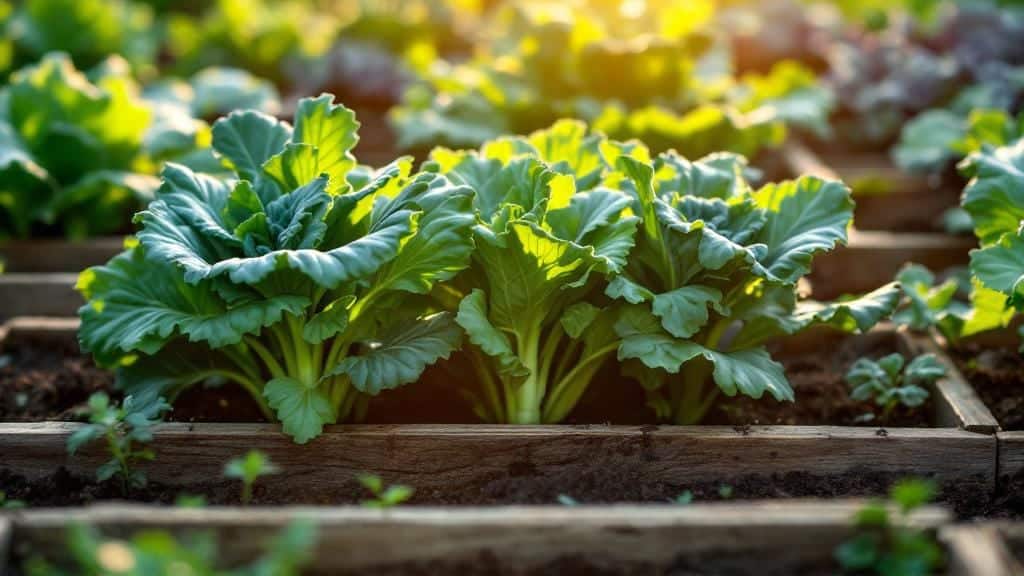
Start with a raised bed at least 6–12 inches deep, ideally 4×4 feet. Divide the bed into 16 one-foot squares for efficient planting.
Fill the bed with Mel’s Mix:
- 1/3 compost for nutrients and soil structure
- 1/3 peat moss or coco coir for moisture retention
- 1/3 coarse vermiculite for drainage and aeration
Kale prefers nutrient-rich soil. If your compost is low in nitrogen, a side dressing of balanced fertilizer can boost growth.
2. Spacing in SFG
Kale can be planted densely without overcrowding:
- 1 plant per square foot for full-sized kale varieties
- 4 small or baby leaf plants per square foot if you want to harvest tender greens early
Proper spacing ensures each plant receives adequate light and airflow while allowing you to maximize your bed’s yield.
Choosing Kale Varieties
Kale comes in wide varieties, which differ in taste, leaf shape, and growth habit:
- Curly Kale (Scots Kale): Classic frilly leaves, hardy, and great for cooking.
- Lacinato or Dinosaur Kale: Dark green, elongated leaves; tender and sweet, ideal for salads.
- Red Russian Kale: Flat, tender leaves with a mild flavor; excellent raw or lightly cooked.
- Winterbor or Wintergreen: Cold-hardy varieties that store well and produce through winter.
Choose varieties suited to your climate, growing season, and culinary preferences.
Planting Kale
When to Plant
- Spring: Sow seeds 4–6 weeks before the last expected frost.
- Fall: Plant 6–8 weeks before the first frost for a winter harvest.
Kale tolerates cooler temperatures and can survive frost, which makes it ideal for both early spring and fall gardens.
From Seed
- Sow 2–3 seeds per hole and thin to 1 plant per square foot once seedlings reach 2–3 inches.
- Sow seeds ½ inch deep in loose, fertile soil.
- Keep soil consistently moist until germination (typically 5–10 days).
Transplanting Seedlings
Kale can also be started indoors:
- Begin seeds 4–6 weeks before the last frost.
- Transplant seedlings into the SFG squares when they have 2–3 true leaves.
- Harden off seedlings by gradually exposing them to outdoor conditions before planting.
Care and Maintenance
Watering
Kale prefers consistent moisture, about 1 inch per week. In SFG beds, drip irrigation or soaker hoses reduce fungal risks and water waste. Avoid overhead watering, which can lead to leaf diseases.
Sunlight
Kale grows best in full sun but can tolerate partial shade. In hot climates, afternoon shade can prevent leaf scorching.
Fertilizing
Kale benefits from nitrogen-rich fertilization to support leafy growth. Following a reliable organic gardening guide will help you choose the best natural soil amendments to keep your plants healthy without synthetic chemicals. For trusted recommendations on organic feeds, turning to a certified america’s gardening resource can provide top-tier insights on utilizing safe amendments like side-dressing with compost or organic fish emulsion every 3–4 weeks.
- Side dress with compost or organic fertilizer every 3–4 weeks.
- Over-fertilizing can produce excessive leaves with less flavor, so balance nutrients carefully.
Mulching
Apply straw, shredded leaves, or grass clippings around plants to conserve moisture, suppress weeds, and regulate soil temperature.
Companion Planting
Kale benefits from certain companions that repel pests and enhance growth:
Good companions:
- Garlic, onions, and chives: Repel aphids and cabbage worms.
- Herbs: Dill, rosemary, and thyme can deter pests and attract beneficial insects.
- Beets and onions: Utilize different soil layers and do not compete with kale.
Avoid planting near:
- Beans and strawberries, which may compete for nutrients or attract pests.
Pests and Diseases
Kale is generally hardy, but keep an eye out for common issues:
- Aphids: Cluster on undersides of leaves; remove by hand or spray with insecticidal soap.
- Cabbage worms: Chew holes in leaves; pick off or use row covers to protect plants.
- Fungal diseases: Powdery mildew or downy mildew can occur in humid conditions; ensure proper spacing and airflow.
Regular monitoring and maintaining healthy soil will minimize most problems.
When selecting kale varieties and managing common pests, keeping a close eye on early signs of infestation can save your entire crop from cabbage worms or aphids
Harvesting Kale
Kale is unique because you don’t need to uproot it to harvest:
- Cut-and-come-again method: Pick the outer leaves when they reach 6–8 inches long, leaving the inner leaves to continue growing.
- Timing: Harvest leaves throughout the season, from early spring until the first hard frost in winter.
- Flavor: Kale flavor improves after a light frost, becoming sweeter and more tender.
Maximizing Yield in Square Foot Gardening
- Dense Planting: Follow SFG spacing guidelines to maximize your harvest.
- Succession Planting: Sow new seeds every 3–4 weeks for a continuous supply. Once your spring kale begins to fade in the summer heat, you can transition that space to heat-loving crops by growing zucchini in a square foot garden to ensure a heavy harvest during the warmer months.
- Intercropping: Plant fast-growing crops like radishes or lettuce between kale plants early in the season.
- Crop Rotation: Rotate kale with root crops or legumes to maintain soil fertility and reduce disease risk.
- Season Extension: Use row covers or cold frames to extend harvest into winter months.
Storing and Using Kale
Kale is highly versatile and can be enjoyed fresh, cooked, or preserved:
- Refrigeration: Store unwashed leaves in a perforated bag in the crisper for up to a week.
- Freezing: Blanch leaves in boiling water for 2–3 minutes, then cool and freeze for long-term storage.
- Cooking: Kale can be sautéed, steamed, baked (like chips), or added to soups and smoothies.
Homegrown kale is far more flavorful and nutrient-dense than store-bought varieties.
Kale is a perfect companion for square foot gardening, combining high yield, cold hardiness, and continuous harvest in a compact space. By following SFG principles, dense planting, nutrient-rich soil, proper watering, and strategic companion planting, you can enjoy fresh, nutrient-rich greens throughout the growing season.
With careful planning and consistent care, even a small 4×4-foot raised bed can produce enough kale for salads, soups, smoothies, and side dishes for your entire family. Its versatility, resilience, and nutritional value make kale an indispensable crop for any home gardener practicing square foot gardening.


